China Top Solar LED Lights Manufacturers for Global Buyers

Choosing the right China-based supplier requires more than comparing catalog prices. Global buyers need Solar Led Lights that perform reliably after installation, not only during a factory demonstration. This guide examines manufacturers through product quality, engineering capability, export experience, and customer support. It considers practical details, including battery capacity, panel efficiency, lighting coverage, and controller performance.

Experienced suppliers should provide clear datasheets and traceable test records. Look for evidence of IP65 or higher protection, tested battery cycles, and stable operation across changing temperatures. Certifications such as CE and RoHS may support market entry, but buyers should verify their validity and relevance. Factory audits, production photographs, and independent sample testing can reveal details that polished websites often miss. A bright sample is not enough.

A reliable manufacturer also explains installation limits honestly. Shaded locations, long rainy seasons, and poor ground conditions can reduce performance. Ask how the system behaves after several cloudy nights. Request a sample before placing a large order. Small details matter, such as cable length, mounting strength, spare parts, and firmware access. A perfect supplier does not exist. Even strong factories may have communication gaps or inconsistent batch quality. Careful buyers should record specifications, test results, and agreed remedies before production. The manufacturers discussed here are evaluated for practical value, technical credibility, and dependable cooperation with international customers. This approach helps buyers make informed decisions while avoiding impressive claims unsupported by measurable evidence.

China Top Solar LED Lights Manufacturers for Global Buyers

What Solar LED Lights Are and Why China Leads Their Production

Solar LED lights combine a photovoltaic panel, LED chips, a rechargeable battery, and a control system. During daylight, the panel converts sunlight into electricity. At night, the stored energy powers the lamp, often through motion or dusk-to-dawn sensors.

A typical street unit may use a 20–60 watt panel, a lithium battery, and LEDs producing focused white light. The design avoids underground cables, which helps on rural roads, factory yards, and construction entrances. Performance still depends on sunlight, temperature, battery quality, and local installation practices. Cloudy weeks expose weak designs quickly.

China leads production because its solar manufacturing network is unusually complete. The International Energy Agency reported that China held over 80% of global manufacturing capacity across major solar photovoltaic stages in 2022. IEA PVPS also recorded 216.9 gigawatts of new solar capacity in China during 2023. This large domestic market supports component supply, engineering talent, automated assembly, and competitive testing costs.

For global buyers, this means more choices in panel size, battery chemistry, housing materials, and lighting controls. It does not guarantee every product performs well. Buyers should request battery cycle data, salt-spray testing, ingress protection results, and actual runtime measurements. Product sheets can look precise. Field conditions are less polite.

Reports: International Energy Agency, Solar PV Global Supply Chains, 2022; IEA PVPS, Trends in Photovoltaic Applications 2024.

Main Types of Solar LED Lights for International Applications

China Top Solar LED Lights Manufacturers for Global Buyers

Main Types of Solar LED Lights for International Applications

Solar LED lighting now serves streets, walkways, farms, ports, and emergency sites. The IEA reported that solar photovoltaic capacity reached a record expansion in 2023, adding about 375 GW globally. This growth supports wider solar lighting adoption, but installation quality still varies.

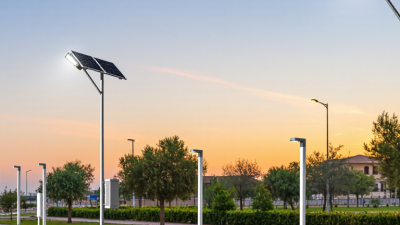
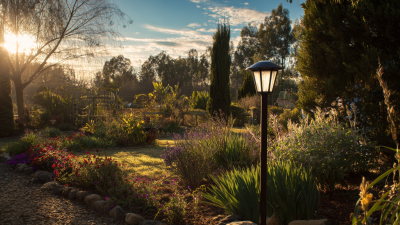
Solar street lights suit roads, parking areas, and village entrances. Integrated models combine the panel, battery, controller, and lamp in one housing. Split-type systems allow larger panels and easier battery replacement. Pathway and garden lights use lower output for parks, resorts, and residential compounds. Solar floodlights provide wider beams for yards, construction zones, and security perimeters. Portable solar lanterns support temporary work areas and disaster-response locations. Solar traffic signs and warning beacons improve visibility near crossings and remote roads.

Performance depends on more than LED wattage. The World Bank’s Lighting Global quality framework highlights battery safety, durability, and verified lighting performance. Buyers should check local solar radiation, rainy-season autonomy, operating temperature, and pole height. A six-hour lighting promise may fail during several cloudy days. That weakness deserves attention. Field inspections often find shaded panels, undersized batteries, and poor drainage around poles.

Tips: Request photometric files, battery-cycle data, IP ratings, and independent test reports. Test one complete installation before a large order. Keep replacement parts available locally. A cheaper fixture can become expensive when access roads, labor, and battery replacement are included.

How to Evaluate Chinese Solar LED Light Manufacturers

Evaluating Chinese solar LED light manufacturers requires more than comparing catalogue prices. I usually begin with factory records, production capacity, and export experience in similar climates. Ask for evidence, not polished promises. A reliable supplier should provide test reports, material specifications, and clear warranty terms.

Request a sample before placing a large order. Check the panel surface, battery compartment, wiring, seals, and mounting hardware. Measure brightness after several hours of charging, not only during a showroom demonstration. Review lighting duration during cloudy weather. Numbers can mislead. A claimed twelve-hour runtime may depend on a small load and ideal sunlight.

Professional manufacturers explain their quality controls in practical detail. They should identify battery chemistry, LED efficiency, charging protection, and ingress protection ratings. Verify whether independent laboratories issued the relevant reports. Also inspect packaging, spare-part availability, and response times for technical questions. Slow replies before an order may become slower after shipment.

A factory visit can reveal useful details, such as organized assembly lines, calibration tools, and traceable inspections. However, one visit is not enough. Production conditions can change. Request recent records and compare them with the delivered sample. I would also discuss customization carefully, because a cheaper design may reduce battery life or weather resistance. A dependable partnership needs transparent communication, realistic performance data, and room to correct mistakes.

China Top Solar LED Lights Manufacturers for Global Buyers - How to Evaluate Chinese Solar LED Light Manufacturers
Practical evaluation matrix for comparing suppliers without relying on company or brand names
Evaluation Dimension Recommended Benchmark Evidence to Request Why It Matters Buyer Rating
Product Type and Application Confirm whether the product is designed for street lighting, pathway lighting, security lighting, or decorative use. Product datasheet, photometric file, installation drawings, and recommended application range. Different applications require different optical distributions, mounting heights, protection levels, and battery capacities. Verify
LED Efficacy A practical commercial target is approximately 120–180 lm/W for the complete luminaire, subject to operating current and test conditions. LM-79-style photometric report or an equivalent independent laboratory report stating luminaire lumens, input power, CCT, and test temperature. System efficacy provides a more useful comparison than the LED chip’s claimed theoretical performance. High Priority
Photometric Performance The supplier should provide an IES or LDT file and a lighting simulation for the actual road width, pole spacing, mounting height, and target illumination. IES/LDT file, lighting calculation, uniformity result, and glare-control information. High lumen output alone does not guarantee adequate lighting uniformity or useful road coverage. High Priority
Solar Panel Technology Monocrystalline photovoltaic modules commonly offer approximately 18–23% module efficiency, depending on cell technology and rated conditions. Panel nameplate, rated power, open-circuit voltage, short-circuit current, dimensions, and flash-test or EL-test documentation. Panel power affects daily energy recovery and the system’s ability to operate during periods of low solar radiation. Verify
Battery Chemistry and Capacity LiFePO4 is commonly preferred for outdoor solar lighting because of its thermal stability and long cycle life. Capacity should be stated in Wh, not only Ah. Battery chemistry, nominal voltage, rated Ah, calculated Wh, operating temperature range, cell documentation, and battery-management-system specifications. Battery energy storage determines overnight runtime and resilience during consecutive cloudy days. High Priority
Battery Cycle Life A credible specification should define cycle-life conditions. LiFePO4 cells are often rated around 2,000–4,000 cycles, depending on depth of discharge, temperature, and end-of-life capacity. Cell datasheet identifying test conditions, depth of discharge, charge/discharge rate, and remaining-capacity criterion. Cycle-life figures are meaningful only when the testing conditions are clearly disclosed. High Priority
Autonomy in Low-Sun Conditions For many outdoor projects, buyers commonly request approximately 2–5 nights of autonomy, but the correct value depends on location, load profile, and solar-resource data. Energy-balance calculation using local solar irradiation, battery usable capacity, LED wattage, dimming schedule, and system losses. Autonomy is a system-level calculation and cannot be judged from battery capacity alone. High Priority
Protection Rating IP65 is a common minimum target for outdoor luminaires; IP66 provides additional protection against powerful water jets. The rating should apply to the complete enclosure. IP test report identifying the tested model, test standard, laboratory, and enclosure configuration. Ingress protection reduces the risk of water and dust damage in outdoor environments. Mandatory
Impact Resistance IK08 or higher is a reasonable target for products exposed to public areas, vandalism risk, or accidental impact. Impact-test report showing the IK rating, test energy, tested component, and applicable standard. Impact resistance helps protect the housing, diffuser, and internal components during installation and operation. Recommended
Operating Temperature The declared range should suit the installation location. A common outdoor target is approximately −20°C to +50°C for the complete luminaire, with separate limits for the battery. Full product temperature specification, thermal test data, battery temperature limits, and charging protection logic. Battery charging and LED performance can be affected by extreme cold or heat. Verify
Electrical and Photobiological Safety Request conformity documentation relevant to the destination market, including applicable luminaire safety, EMC, and photobiological-safety requirements. Test reports referencing applicable parts of IEC 60598, EMC requirements, and IEC 62471 or an equivalent photobiological-safety assessment. Compliance documentation helps reduce electrical, electromagnetic, and optical safety risks. Mandatory
Battery Transport Compliance Lithium-battery shipments should be supported by transport documentation appropriate to the battery type and shipping method. UN 38.3 test summary, safety data sheet, packaging information, and applicable transport declarations. Missing transport documents can cause customs delays, shipment rejection, or additional logistics costs. Mandatory
Controller and Lighting Modes The controller should support programmable dimming, dusk-to-dawn operation, battery protection, and low-voltage or over-temperature safeguards. Controller datasheet, default lighting curve, remote-control instructions, fault codes, and programming procedure. Smart dimming can reduce energy consumption and extend autonomy without sacrificing essential lighting hours. Recommended
Warranty Terms A written warranty of 3–5 years is commonly requested for commercial outdoor solar lighting, with separate terms for LEDs, electronics, batteries, and panels. Signed warranty document defining coverage, exclusions, response time, replacement procedure, and spare-parts responsibility. A single headline warranty period may not cover every system component equally. High Priority
Quality-Control Process The supplier should demonstrate incoming-material inspection, production testing, aging or burn-in procedures, and final inspection. Quality-control plan, inspection checklist, sample inspection records, calibration certificates, and corrective-action process. Documented process control is more reliable than verbal claims about product quality. High Priority
Sample and Pilot-Order Support The supplier should provide a functional sample before mass production and accept clearly defined pilot-order specifications. Sample quotation, sample test report, approved drawing, bill of materials, and pre-production approval procedure. Field testing can reveal installation, charging, optical, and environmental problems before a large purchase. Recommended
Customization Capability Confirm whether the supplier can customize wattage, mounting arm, housing color, lighting profile, battery capacity, solar-panel size, and packaging. Engineering-change process, technical drawings, tooling charges, minimum order quantity, and sample approval timeline. Customization affects performance, lead time, cost, spare parts, and future replacement compatibility. Verify
Production and Delivery Planning Lead time should be confirmed in writing after design approval, with separate schedules for samples, mass production, inspection, and shipment. Production schedule, capacity statement, agreed Incoterms, packaging specification, and shipment milestone plan. Clear scheduling helps buyers coordinate construction, installation, customs clearance, and site labor. Verify
Total Cost of Ownership Compare purchase price together with freight, installation, battery replacement, maintenance, spare parts, energy savings, and expected service life. Itemized quotation, energy model, replacement-cost estimate, spare-parts list, and maintenance assumptions. The lowest initial price may result in higher lifecycle costs if the battery, controller, or housing requires early replacement. High Priority
Evaluation note: The benchmarks above are practical buyer-screening criteria rather than automatic proof of compliance. Final acceptance should be based on model-specific test reports, approved samples, destination-market requirements, and an independent pre-shipment inspection where appropriate.

Manufacturing, Quality Control, and Certification Standards

China Top Solar LED Lights Manufacturers for Global Buyers: Manufacturing, Quality Control, and Certification Standards

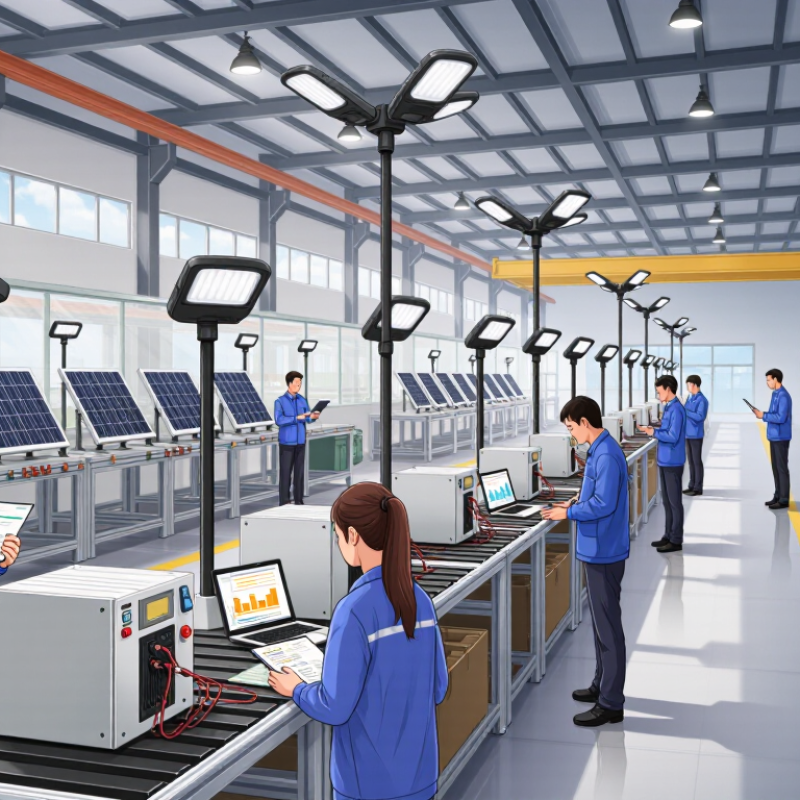
China’s solar LED lighting sector serves buyers across streets, gardens, farms, and remote facilities. IEA’s Renewables 2023 report recorded nearly 375 GW of global solar PV additions that year. This growth increases demand for dependable lighting components. Serious manufacturers control cell sourcing, battery matching, LED efficiency, and enclosure assembly under one quality system. Production lines should record soldering temperatures, torque settings, and battery capacity. Small details matter.

Quality control must continue after assembly. Samples need charging tests, rain simulation, salt-spray exposure, and repeated on-off cycles. IEC 60598 supports safety requirements for luminaires, while IEC 62133-2 addresses rechargeable battery safety. ISO 9001 can support process consistency, and ISO/IEC 17025 accreditation strengthens laboratory test credibility. IRENA’s Renewable Capacity Statistics 2024 reported 473 GW of renewable capacity added globally in 2023, showing why scalable quality systems matter. Yet a certificate is not proof of every shipment. Batch records and independent inspections remain necessary. Some suppliers still rely too heavily on laboratory samples. That deserves scrutiny.

Tips: Request test reports with model numbers, dates, and laboratory details. Check IP ratings against the actual housing design, not only marketing documents. Ask for a pilot batch before large orders. Measure nighttime brightness, charging time, and battery performance in real weather. Factory visits can reveal cable sealing, dust control, and manual rework. No process is perfect. Good suppliers admit weaknesses and correct them with evidence.

Export, Installation, and After-Sales Considerations for Global Buyers

Exporting solar LED lights involves more than choosing lumen output and panel size. Global buyers should request test reports, battery specifications, packing details, and clear product drawings. Export documents must match the shipment, including voltage data, carton dimensions, and country-of-origin information. Small errors can delay customs clearance.

Installation begins with a careful site survey. Record daily sunlight, pole spacing, soil conditions, and nearby trees or buildings. A coastal project may need stronger corrosion protection, while a cold region requires batteries suited to low temperatures. Installers should check panel direction, cable sealing, foundation depth, and lighting coverage at night. A practical mistake is trusting software alone. Real shadows often differ from satellite images.

After-sales support should include a written warranty, troubleshooting steps, spare parts, and response times. Buyers need access to battery replacement guidance and controller fault codes. Remote support is useful, but it cannot replace local technical training. Keep several spare units near large sites. This reduces downtime when a driver or sensor fails. One lesson deserves attention: installation manuals are sometimes too general. Suppliers should provide site-specific diagrams, torque requirements, and commissioning records. Buyers should also confirm who pays for replacement freight, labor, and inspection costs. Clear responsibility prevents disputes after the first rainy season.

Go to Top