
In an era of rapid urbanization, smart cities are emerging as the solution to modern challenges. One essential component of these cities is the integration of Solar Led Street Light technology. This innovation not only enhances public safety but also contributes to energy efficiency and sustainability. With the growing demand for renewable energy solutions, Solar Led Street Lights present a compelling case for cities looking to optimize their infrastructure.
The advantages of Solar Led Street Lights go beyond mere illumination. They offer cost savings through reduced energy consumption and maintenance expenses. Moreover, these lights utilize solar energy, promoting environmental responsibility. As cities strive to reduce carbon footprints, Solar Led Street Lights stand out as a practical choice. However, implementing this technology is not without its challenges, such as reliance on sunlight and initial installation costs.
Community feedback is vital. Some residents may have concerns about their brightness or potential light pollution. Addressing these issues is crucial. Engaging with the community can lead to improvements and foster acceptance. Solar Led Street Lights represent a balance of innovation and practicality, paving the way for a smarter, greener urban future.

Solar LED street lights are transforming urban lighting systems. They offer significant advantages for smart cities. These lights use renewable solar energy, reducing reliance on traditional power sources. This shift lowers electricity costs, benefiting city budgets in the long run.
Moreover, solar LED lights reduce carbon emissions. This contributes to a cleaner environment, a crucial aspect for modern urban planning. Their efficient design provides bright illumination while minimizing energy consumption. Cities can enhance safety and visibility without increasing their carbon footprint. Installation is often easier and faster than conventional street lights. However, they may be less effective in areas with limited sunlight.
Maintenance is also a factor. While solar lights have lower operational costs, battery replacement can be necessary over time. Cities must plan for these expenses. Balancing initial investment and long-term savings requires careful analysis. Solar LED street lights clearly align with the goals of sustainable urban development. They foster a greener future while addressing practical urban challenges.
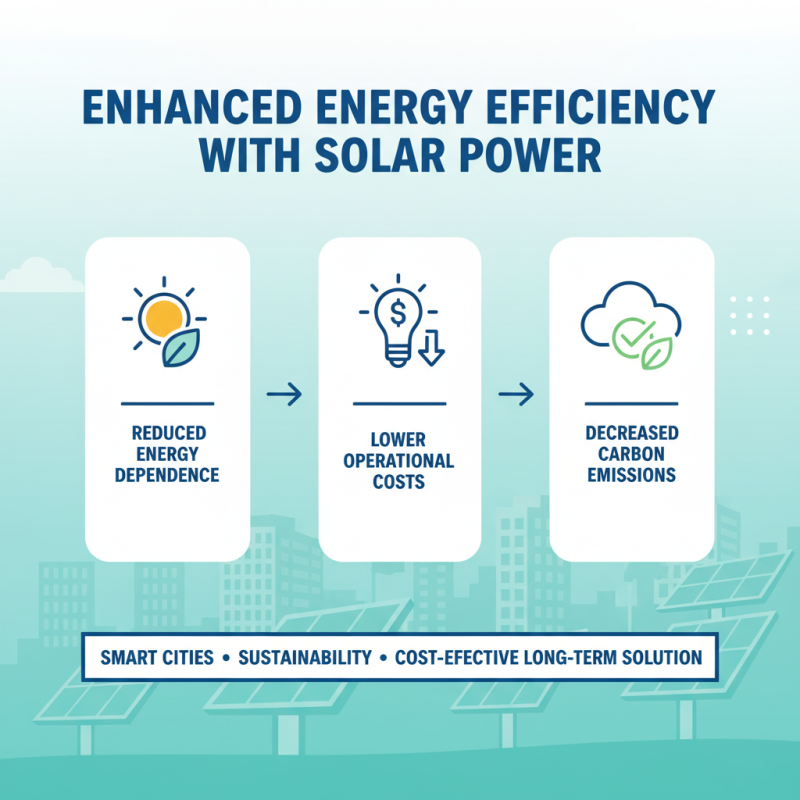
Solar LED street lights offer significant advantages for smart cities, especially regarding energy efficiency. By harnessing solar power, these lights reduce dependency on traditional energy sources. This shift not only cuts costs but also lowers carbon emissions. With the rise in energy prices, solar-powered systems prove to be a cost-effective long-term solution.
When considering solar street lights, it's important to choose the right location. Ensure they receive maximum sunlight for optimal charging. Regular maintenance is also crucial. Dust and debris can hinder performance. However, occasional failures in the system can occur, requiring careful monitoring and timely repairs.
Installing solar LED street lights can encourage community engagement. Residents may feel a stronger connection to their environment while benefiting from enhanced safety. Yet, challenges remain. Some areas might lack adequate sunlight, limiting solar energy effectiveness. Local policymakers should examine these potential pitfalls to ensure successful implementation.
The installation of solar LED street lights can lead to significant savings. Central to smart cities, these lights rely on solar energy, reducing electricity costs. Since they are powered by the sun, ongoing energy expenses are eliminated. This shift can free up budget for other urban projects.
Maintenance costs are also considerably lower with solar lights. Traditional street lights require frequent bulb changes and wiring repairs, unlike solar LEDs. Their built-in smart sensors can alert city managers to malfunctions. This proactive approach reduces the need for routine checks.
Tips for implementation include assessing local sunlight availability. Understanding solar potential is crucial for maximizing performance. Cities should also consider community input for placement. Engaging residents can enhance the success of these initiatives. Regular evaluation ensures the system remains effective over time, adapting to changing urban landscapes.
Solar LED street lights are transforming urban landscapes. They offer a sustainable lighting solution that minimizes environmental impact. These lights reduce energy consumption significantly. They also operate on renewable solar energy, lessening dependency on fossil fuels. This switch contributes to lower greenhouse gas emissions. In smart cities, this technology enhances public safety while promoting sustainability.
Installing solar LED street lights can reduce electric bills. Cities can allocate savings to other vital projects. This transition also decreases light pollution through focused illumination. The design of these lights is often sleek and modern, blending seamlessly into urban environments. However, the initial investment can be challenging for some municipalities.
Tips: Assess your city’s solar potential before investing. Consider the local climate and sunlight availability. Engaging the community helps in understanding their needs and preferences regarding street lighting. It's wise to review potential partnerships for funding these projects, making them more accessible for cities of all sizes.
The integration of solar LED street lights with smart city infrastructure is crucial for enhancing urban safety and connectivity. These lights not only provide illumination but also serve as communication hubs within the urban landscape. According to a report by the International Renewable Energy Agency (IRENA), cities that adopt advanced lighting technologies can reduce overall energy consumption by up to 30%. This reduction is significant for urban planners focused on sustainability.
Data from the Smart Cities Council outlines that integrating sensors into solar street lights can detect and respond to environmental changes. For instance, lights can adjust brightness based on pedestrian presence. Moreover, they can collect data on traffic patterns, providing valuable insights for city management. However, challenges remain, such as ensuring the security of data collected and the reliability of technology in various weather conditions.
Effective connectivity is another benefit. Smart street lights can link to other city infrastructure, such as traffic signals and public transport systems. Cities could manage traffic flow better, reducing congestion and improving travel times. Yet, the implementation of such technology requires careful planning and investment. Each city's unique needs must be considered to avoid costly mistakes and ensure long-term success.
| Benefit | Description | Impact |
|---|---|---|
| Energy Efficiency | Utilizes solar energy which reduces reliance on non-renewable sources. | Lower energy costs and reduced carbon footprint. |
| Reduced Maintenance | Long lifespan of LEDs decreases the need for frequent replacements. | Cost savings on maintenance and labor. |
| Enhanced Safety | Improved illumination in public spaces reduces accidents and crime rates. | Increased public safety and community confidence. |
| Smart Connectivity | Can be integrated with IoT devices for data collection and management. | Facilitates real-time monitoring and adaptive lighting. |
| Lower Carbon Emissions | Solar lighting systems produce no emissions during operation. | Contributes to city-wide sustainability goals. |
| Aesthetic Appeal | Modern design options complement urban landscapes. | Enhances the atmosphere and attractiveness of public spaces. |
| Operational Independence | Function without the grid, ensuring light availability in outages. | Increased resilience of urban infrastructure. |
| Community Engagement | Involving citizens in planning enhances public acceptance. | Strengthens community ties and civic participation. |
| Scalability | Easily scalable solutions can cater to growing urban areas. | Facilitates expansion without extensive infrastructure investment. |
| Support for Renewable Energy Goals | Aligns with global shifts towards sustainable energy sources. | Enhances city reputation as a leader in sustainability. |