China Top 10 Outdoor Solar Lamp Manufacturers?

China’s outdoor solar-lamp sector sits within a fast-growing global solar market. IRENA’s Renewable Capacity Statistics 2024 reported 473 GW of renewable capacity added worldwide in 2023, including 346 GW of solar. That figure does not measure lamp sales, but it shows how quickly solar technology is scaling. Small details still matter.

For buyers comparing China’s outdoor lighting suppliers, factory claims deserve careful checking. A bright sample on a sunny afternoon may not perform through a cloudy week. Battery capacity, panel output, runtime, lumen rating, weather protection, warranty terms, and independent test records all help reveal what a product can actually deliver. The International Energy Agency’s World Energy Outlook 2020 described solar as “the new king of electricity markets,” a phrase from IEA Executive Director Fatih Birol. For Solar Lamp Outdoor projects, that momentum is promising, but it does not guarantee dependable lamps.

This guide introduces ten manufacturers for closer evaluation, not as a universal ranking. Compare their product ranges, production capabilities, quality-control evidence, and export experience against your project’s needs. Ask for test reports, not just polished photographs. Then check whether quoted specifications match the lamp you will receive. Some information may remain difficult to verify from public sources; that limitation should be acknowledged, not hidden. A careful shortlist is more useful than a confident-sounding top-ten claim.
China Top 10 Outdoor Solar Lamp Manufacturers?

China's Solar Supply Base: 2023 Module Output Reached About 499 GW

In 2023, China’s solar module output reached about 499 GW, illustrating the scale of its manufacturing base. That figure matters. Yet modules are not complete outdoor lamps. A garden fixture also depends on a correctly sized panel, rechargeable battery, charge controller, LED board, seals, and housing. When sourcing, check runtime after cloudy days, battery replacement access, and water-ingress test details. Big numbers help. Still, national output alone cannot confirm consistent performance from a particular supplier or shipment.

Large-scale module production can support component availability and competitive sourcing, but outdoor lamps use small panels with specific requirements. A 6-watt panel paired with a weak battery may look adequate at noon, then dim before dawn. Ask for panel and battery specifications separately, alongside lumen output, operating temperature, and test conditions. Test samples outdoors over several nights, not only under bright factory lights. This detail is easy to miss. The 499 GW figure is a useful industry signal, not a quality certificate; I would treat it as context, then verify the exact lamp configuration and production controls.

How to Assess Manufacturers: Production Scale, Certifications, and Export Reach

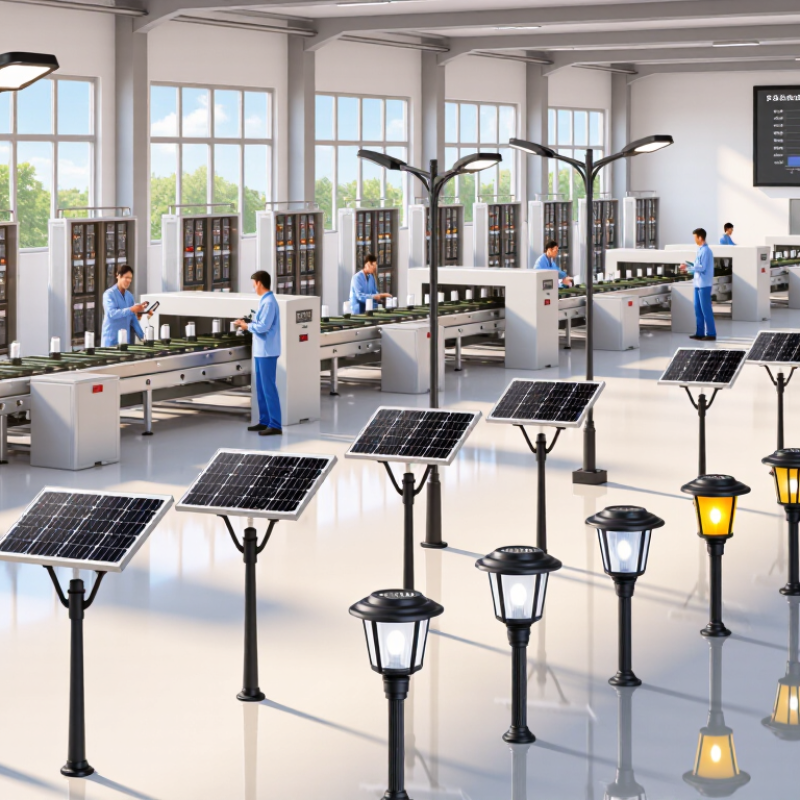
When comparing outdoor solar lamp manufacturers, look beyond a factory’s headline production capacity. Ask how many units it can assemble each month and whether that figure includes seasonal peak orders. A site visit or live production video can show whether workers follow consistent assembly and inspection steps. Request sample records for battery charging, light output, and water-resistance checks. A polished showroom proves little.

Certifications need careful review. Check that documents match the exact product type, model, and manufacturing site, and confirm they come from a recognized testing body. Ask for test reports covering relevant details, such as ingress protection and battery performance. A certificate alone does not guarantee reliable products. Export reach matters, too: request examples of destination markets, shipping schedules, packaging specifications, and available replacement parts. Clear answers are useful. Vague promises deserve another question.

Tips: Compare the same sample criteria across suppliers. Ask for a small pilot order before scaling up. Check carton labels and manuals, not just the lamp. One detail is easy to miss: export experience does not always mean experience with your specific market.

China's Top 10 Outdoor Solar Lamp Manufacturers and Their Core Product Lines

China’s outdoor solar lamp manufacturers serve several distinct needs. Their core lines commonly include integrated street lights, split solar street systems, garden bollards, pathway lamps, wall lights, and security floodlights. Integrated models place the panel, battery, and LEDs in one housing. Split systems allow a larger panel to sit apart from the lamp, which can help where daylight is limited.

For a comparison of ten manufacturers, product range matters more than a polished catalogue. Check panel size, battery capacity, housing material, and how the lamp performs after several cloudy days. Ask for test data and clear operating instructions. Small details count: a sealed cable entry, a replaceable battery, or a mounting bracket that fits a real pole. Some suppliers focus on municipal street lighting; others specialize in decorative garden fixtures or motion-sensing wall lamps. Not every product suits every site. A bright floodlight may drain its battery quickly, while a modest pathway lamp may be inadequate near a driveway. Specifications can look tidy on paper. Field performance is less tidy, and that is worth admitting.

China Top 10 Outdoor Solar Lamp Manufacturers and Their Core Product Lines

The entries below are anonymized product-portfolio profiles, not a verified ranking or company-by-company directory. Product categories and applications are common across the outdoor solar lighting industry; no specific manufacturer or brand is identified.

Profile Core product lines Typical applications Common product characteristics
Profile 1 Integrated solar street lights Residential roads, pathways, parking areas Solar panel, battery, LED light source, and control electronics are combined in a compact fixture.
Profile 2 Split-type solar street lights Roads and sites where panel placement or maintenance access matters The solar panel is separate from the luminaire, allowing more flexibility in panel orientation and installation.
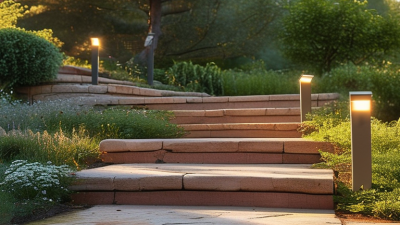
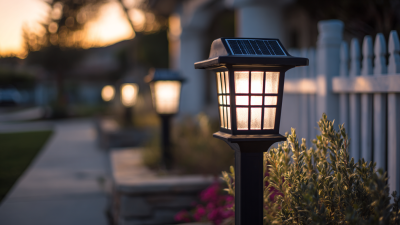
Profile 3 Solar garden and landscape lights Gardens, paths, patios, and landscaped areas Decorative formats commonly include bollard, stake, wall-mounted, and pathway designs.
Profile 4 Solar floodlights and security lights Building exteriors, entrances, yards, and perimeter areas Some models use motion sensors to activate or increase light output when movement is detected.
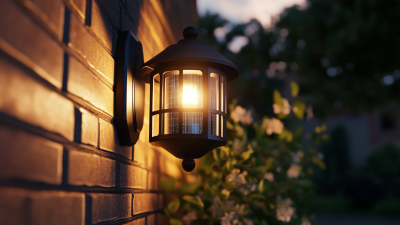
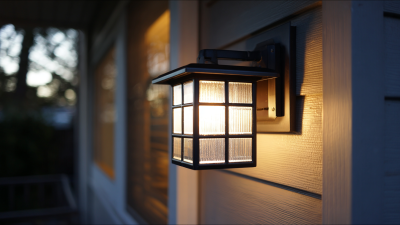
Profile 5 Solar wall lights and step lights Outdoor walls, fences, stairs, and entryways Compact fixtures are designed for localized illumination and are often mounted directly to a surface.
Profile 6 Solar pathway and bollard lights Walkways, driveways, courtyards, and public spaces Low-height fixtures provide path marking and area lighting; designs vary in height, optics, and mounting method.
Profile 7 Solar high-bay and area lights Open yards, loading areas, and selected large outdoor spaces Product suitability depends on mounting height, light distribution, solar exposure, and required operating hours.
Profile 8 Solar sign and billboard lights Outdoor signs, notice boards, and display panels Fixtures are arranged to illuminate a sign face; panel placement and beam coverage are important design considerations.
Profile 9 Solar street-light poles and mounting accessories Street-light and site-lighting installations Related components can include poles, brackets, mounting hardware, and foundations matched to the installation design.
Profile 10 Solar emergency and portable outdoor lights Temporary work areas, campsites, and backup lighting needs Portable formats may combine rechargeable storage with solar charging; runtime varies with capacity and operating mode.

Compare Key Specs: IP65 Under IEC 60529, Light Output, and Battery Autonomy

When comparing outdoor solar lamp manufacturers, treat IP65 as a test rating, not a promise of suitability for every site. Under IEC 60529, the first digit 6 indicates dust-tight protection, while the second digit 5 indicates protection against water jets. Useful, but not immersion-proof. Ask whether the rating applies to the complete assembled lamp, including cable entries and seals. A neat housing can still fail where water collects around a loose joint.

Compare light output in lumens, then consider beam spread and mounting height. A bright rating may illuminate a small patch while leaving a pathway dim. Battery autonomy deserves the same scrutiny: ask how many hours the lamp operates after a full charge, and at what brightness. Panel size, shade, season, temperature, and dimming settings all affect real results. Request test conditions, not just a headline number. In practice, winter performance can disappoint even when the datasheet looks convincing; I would leave room for that uncertainty when sizing a system.

Verify Product Safety Against IEC 60598-2-3 and Quality-Test Documentation

When evaluating China’s top outdoor solar lamp manufacturers, examine test evidence before comparing price or appearance. IEA PVPS’s Snapshot of Global PV Markets 2024 reports that global cumulative solar capacity exceeded 1.6 terawatts by the end of 2023. Growth makes reliable outdoor lighting more important, but market expansion alone does not prove product safety.

IEC 60598-2-3 sets particular safety requirements for road and street lighting luminaires. Confirm that it applies to the exact product; decorative garden lights may fall under different requirements. Request a complete laboratory report, not just a certificate image. Check the tested model number, sample photos, test date, and laboratory details. Look for relevant checks covering ingress protection, insulation, electrical strength, and temperature rise. Compare these results with the datasheet and production model. A polished document can still leave questions unanswered.

Tips: Ask for quality-control records from routine production, such as inspection results and batch traceability. Confirm that report variants match the lamp’s housing, driver, and mounting method. If a supplier cannot explain a failed test or a model mismatch clearly, pause. That small doubt matters.

Go to Top