Top Solar Pathway Lights Suppliers in China

Solar Pathway Lights turn a small solar panel, battery, and LED into practical outdoor guidance. Their appeal is easy to see: no trenching, a gentle pool of light along a garden path, and installation that can often be completed without an electrician. Yet a tidy product photo does not tell buyers how a light performs after cloudy days, repeated charging cycles, or a wet winter.

The wider solar industry provides useful context, though not a direct measure of pathway-light sales. The IEA PVPS Snapshot of Global PV Markets 2024 reported approximately 456 GW of new solar photovoltaic capacity installed worldwide in 2023. The IEA’s 2022 report, Solar PV Global Supply Chains, also described China’s leading role across major stages of solar-panel manufacturing. These figures help explain why Chinese suppliers are important to explore. They do not prove that every factory makes reliable garden lights. That distinction matters.

This guide examines suppliers through practical signals: product range, battery and panel specifications, materials, customization, testing information, and export experience. A stainless-steel housing may look reassuring, but buyers should still check its grade and finish. Ask how runtime is measured, whether replacement parts are available, and what happens when sunlight is limited. Small details count. Supplier rankings can be imperfect, too; public information and product claims vary. A careful shortlist is more useful than a confident-looking list.
Top Solar Pathway Lights Suppliers in China

Overview of China’s Solar Pathway Light Supplier Market

China’s solar pathway light supplier market serves residential gardens, parks, walkways, and commercial landscapes. Suppliers vary in production scale and technical depth. Some assemble standard fixtures, while others support custom housing, color temperatures, and mounting options. This gives buyers flexibility, but product catalogs can make different capabilities look similar.

Key sourcing checks include battery chemistry, panel output, lumen rating, and stated runtime. Ask how performance changes after cloudy days, and request test details for water resistance and battery cycles. Sample units can reveal practical issues, such as uneven light distribution or awkward ground stakes. A low quote may exclude packaging, testing, or replacement parts. Specifications matter, but their wording is not always consistent.

Tips: Compare samples outdoors after dusk. Check whether the light stays steady near dawn, not just during a brief demonstration. Confirm lead times and carton dimensions in writing. Even a careful checklist can miss small fit or finish problems, so allow time for a sample review.

Main Types and Features of Solar Pathway Lights

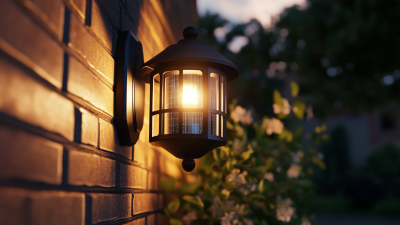
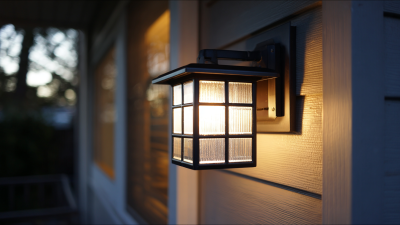
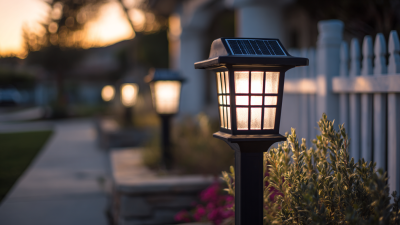
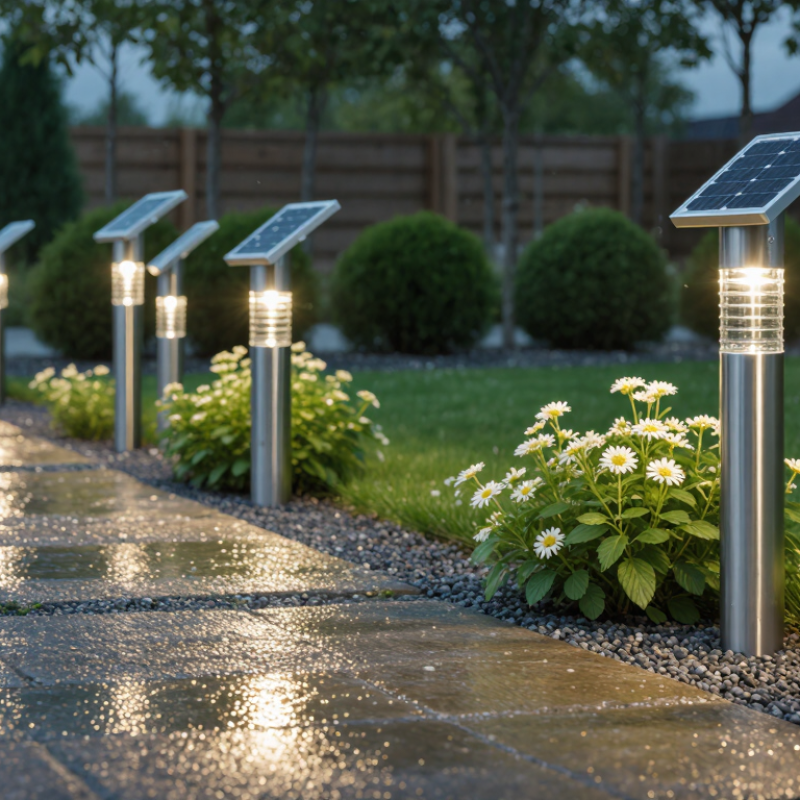
Solar pathway lights come in several practical forms, each suited to a different outdoor layout. Stake lights press into soil beside garden beds, gravel paths, or low steps. Their compact panels work best in open sun; nearby trees can noticeably reduce evening runtime. Bollard-style lights spread illumination more evenly along driveways and wider walkways. Wall-mounted models are useful where paving leaves no room for ground stakes.

Small details matter.

Compare light output, color temperature, battery capacity, and panel size rather than relying on appearance alone. Warm-white light can make a garden path feel softer, while a motion sensor may help conserve stored energy. Check the stated weather-resistance rating and inspect seams, fasteners, and lens covers on a sample. For suppliers in China, ask how runtime was tested and whether replacement batteries are available. A larger panel is not automatically better if the battery or circuit is poorly matched. I would test lights through several cloudy days before settling on a quantity; product figures can look reassuring, but real gardens are less predictable.

How to Evaluate Solar Pathway Light Suppliers

How to Evaluate Solar Pathway Light Suppliers

Supplier evaluation should begin with verifiable performance, not catalogue claims. IRENA’s Renewable Capacity Statistics 2024 reports that global solar capacity reached 1,419 GW in 2023, after adding 346 GW that year. This rapid expansion makes component traceability and quality control worth checking. Ask suppliers for panel output measurements, battery capacity, lumen data, and test conditions. Compare figures under the same conditions. A bright sample in a showroom proves little.

Request reports for battery cycle life, water ingress protection, and temperature testing. Check whether the quoted runtime reflects cloudy days, winter sunlight, and the selected brightness setting. Test it outdoors. A small pilot order can reveal uneven color, loose seals, or dimming after several nights. Inspect production records and ask how failed units are handled. Confirm warranty terms, spare-part availability, and whether replacement batteries match the original specification. These details matter more than a polished presentation.

Supplier documents should identify test methods and sample quantities. Ask for recent batch inspection records, not only a single sample certificate. The IRENA figure describes the wider solar sector; it does not verify any pathway light. That distinction is easy to miss. Even careful checks cannot predict every installation, so trial the lights at the actual site before ordering at scale.

Top Solar Pathway Lights Suppliers in China - How to Evaluate Solar Pathway Light Suppliers
Evaluation Dimension Weight What to Verify Evidence of a Strong Supplier Rating (0–5) Weighted Score
Product Performance 20% Compare light output, beam distribution, operating modes, and runtime under stated conditions. Provides test data that identifies the test conditions, operating mode, and relevant product configuration. _____ _____ / 20
Outdoor Durability 15% Check enclosure materials, corrosion resistance, temperature limits, and the claimed ingress-protection rating. Provides product-specific test documentation for its stated IP rating; IP ratings are classified under IEC 60529. _____ _____ / 15
Solar Panel and Battery 15% Confirm panel specifications, battery chemistry and capacity, replaceability, charging behavior, and expected service conditions. Identifies the installed components and provides clear battery handling, replacement, and operating information. _____ _____ / 15
Quality Management and Consistency 15% Review incoming-material checks, production inspections, final testing, traceability, and corrective-action procedures. Shares relevant inspection records and quality-system documentation; any ISO 9001 certificate is current and covers the relevant scope. _____ _____ / 15
Compliance and Shipping Documents 10% Confirm which destination-market requirements apply and request documents for the exact product and battery configuration. Provides applicable, verifiable test reports and shipping documents. For lithium batteries, request the UN 38.3 test summary when applicable to the shipment. _____ _____ / 10
Production Capacity and Lead Time 10% Assess quoted sample and production lead times, available capacity, peak-season planning, and order-change controls. Gives a documented production schedule and explains how capacity and delivery dates are confirmed for the requested order. _____ _____ / 10
Customization and Packaging 5% Check available options for materials, finishes, color temperature, packaging, and labeling, including any minimum order quantities. Confirms specifications, tooling or setup costs, minimum quantities, and approval steps in a written quotation or specification sheet. _____ _____ / 5
Warranty and After-Sales Support 10% Review warranty coverage, exclusions, claim procedures, spare-part availability, and response channels. Provides written warranty terms and a clear process for documenting, assessing, and resolving product claims. _____ _____ / 10
Total 100% Weighted score = rating ÷ 5 × dimension weight. Verify claims against samples and product-specific documents before placing an order. _____ / 100

Rating guide: 0 = no evidence provided; 1 = major gaps; 2 = limited evidence; 3 = acceptable evidence; 4 = strong evidence; 5 = thoroughly verified. This is a supplier evaluation framework, not a ranking of individual companies.

Profiles of Notable Solar Pathway Light Suppliers in China

Top Solar Pathway Lights Suppliers in China

China’s solar pathway light suppliers often serve different project needs. Some specialize in outdoor lighting engineering, offering adjustable solar panels, replaceable batteries, and advice on spacing. Others focus on contract manufacturing, with options for housing colors, packaging, and custom specifications. A third group supplies broader solar lighting ranges and may coordinate components through several production partners. Ask which parts are made in-house. A polished sample is useful, but it cannot show how a light performs after months of rain and cloudy weather.

Tips: Request a sample and its battery details. Check runtime after a full charge, charging behavior in shade, and the stated water-resistance rating. Ask for test records tied to the exact model, not a similar product. Compare replacement-part availability and warranty terms in writing. Small details matter.

When comparing suppliers, look closely at consistency between samples and production units. Request photos of finished goods, packaging, and inspection steps. Clarify minimum order quantities and lead times before approving a design. For a walkway project, test several lights along a real path; soil, trees, and nearby walls can reduce sunlight. Supplier responses also reveal a lot. Clear answers build confidence, though no checklist removes every risk. Sometimes the first sample is simply not good enough.

Sourcing and Quality Checks for International Buyers

Top Solar Pathway Lights Suppliers in China

China offers many solar pathway light suppliers, but polished samples do not guarantee consistent production. The IEA PVPS Snapshot of Global PV Markets 2024 estimates that global solar capacity exceeded 1.6 terawatts by the end of 2023. This expanding market gives buyers more options, but supplier claims still need checking. Ask for a model-specific bill of materials, battery capacity, LED output, and expected runtime. Request test reports tied to the exact product, not a similar model. Small details matter.

Inspect the solar panel, seals, wiring, and battery compartment on a production sample. Ask for ingress-protection test evidence referencing IEC 60529, then check whether the tested configuration matches the quoted light. Get battery cycle-test results and operating-temperature limits in writing. Simple, but important. A factory audit can help confirm assembly controls and batch traceability. Mark approved samples, and compare delivered goods against them under the same charging conditions. Test several units outdoors; one sunny afternoon proves little. Suppliers may provide attractive lumen or runtime figures, yet results can vary with season, shade, and installation. I would treat those numbers as estimates until independent testing confirms them.

Go to Top