China Top Outdoor Solar Lights Suppliers for Global Buyers

China has become a major sourcing hub for Outdoor Solar lighting, serving residential, commercial, municipal, and security projects worldwide. Its supplier network offers pathway lamps, floodlights, streetlights, wall fixtures, and integrated solar systems. However, product variety can also create confusion. Similar-looking fixtures may hide significant differences in battery chemistry, controller quality, waterproofing, and photovoltaic performance.

John Barentine, a recognized lighting and dark-sky specialist, states, “Light pollution is the inappropriate or excessive use of artificial light.” This reminder matters when selecting Outdoor Solar products. Good suppliers should discuss beam angles, color temperature, motion sensors, shielding, and installation height. A bright lamp is not automatically a better lamp. Sometimes, it creates glare, wastes stored energy, and disturbs nearby homes.

Global buyers should examine factory experience, testing records, component traceability, and export capability. Ask for measurable details. A serious supplier can explain battery capacity, charging time, operating hours, and performance during cloudy weather. Samples should be tested outdoors, not only displayed in a showroom. Check the housing after rain. Check brightness before dawn. Small details often reveal large weaknesses.

Certifications and compliance documents also require careful review. A logo alone proves little without valid reports and matching product models. Buyers should compare warranties, replacement policies, packaging strength, and communication speed. These points are less exciting, but they affect total project cost.

No supplier is perfect. Even experienced factories may overstate winter performance or simplify installation assumptions. A thoughtful sourcing process leaves room for doubt, independent testing, and design changes. This guide introduces leading China Outdoor Solar suppliers and the practical questions global buyers should ask before placing an order.

China Top Outdoor Solar Lights Suppliers for Global Buyers

Understanding China’s Outdoor Solar Lighting Supply Landscape

China’s outdoor solar lighting supply landscape is built around dense manufacturing networks, not isolated factories. According to the International Energy Agency’s Renewables 2024 report, China held over 80% of global solar PV manufacturing capacity across key production stages in 2023. This scale supports competitive access to panels, lithium batteries, controllers, LEDs, and aluminum housings.

The supply chain is highly specialized. Coastal production clusters often handle electronics, injection molding, and export packaging, while nearby workshops focus on poles, brackets, and cast components. A capable supplier should provide IES or LM-79 photometric files, battery cycle data, IP ratings, and measured lighting autonomy. Laboratory reports matter more than catalogue claims. In practice, a lamp rated for three rainy nights may deliver less under winter conditions, dusty panels, or poor battery aging.

The Global Off-Grid Lighting Association reported that off-grid solar products improved energy access for millions of people, but product quality remains uneven. That warning applies to decorative and commercial outdoor lighting too. Buyers should compare tested lumen output, not LED wattage alone. They should also inspect sample wiring, charge protection, and thermal management before approving volume orders. The IEA Photovoltaic Power Systems Programme has highlighted China’s dominant manufacturing position, yet scale does not automatically guarantee reliability. Some specifications still look impressive on paper. They need independent verification, especially for projects exposed to coastal salt, strong wind, or long cloudy periods.

Key Product Types and Technologies for Global Buyers

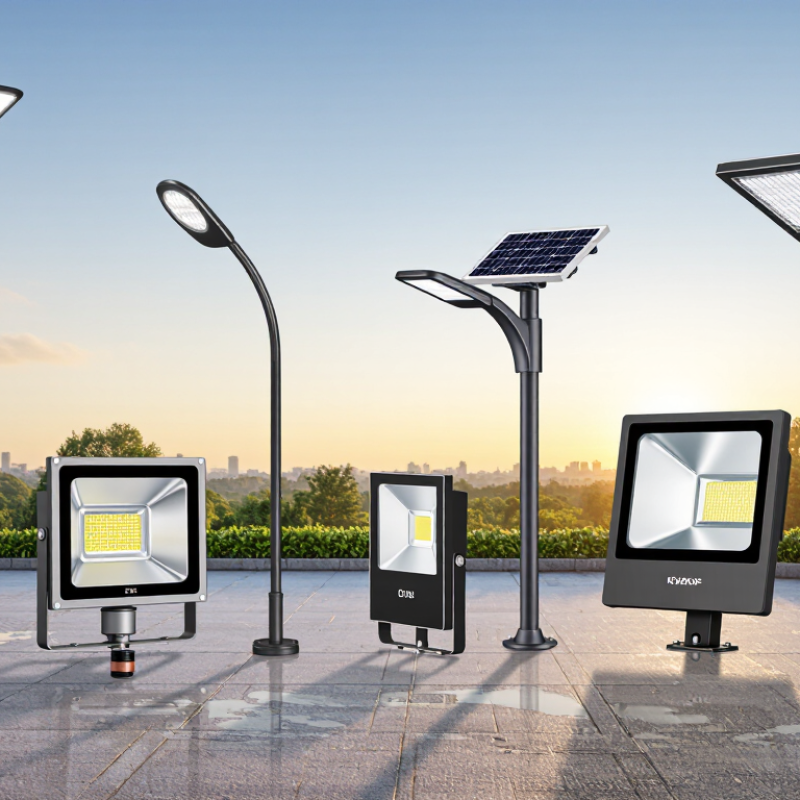
Global buyers usually begin with application, not appearance. Pathway lights guide pedestrians across gardens, resorts, and residential entrances. Bollard lights provide wider visual structure along walkways. Wall-mounted fixtures improve security near doors and service areas. Floodlights suit courtyards, parking zones, and open landscapes. Solar street lights require stronger poles, larger panels, and carefully matched batteries.

LED efficiency directly affects nighttime performance. High-quality modules deliver stable brightness with lower energy consumption. Photometric data helps buyers compare beam angles and lighting coverage. Motion sensors can reduce power use in quiet areas. Dusk-to-dawn controls offer simpler operation. Some systems add remote monitoring, but connectivity is not always necessary. It may increase maintenance needs.

Battery selection deserves close attention. Lithium iron phosphate batteries generally provide safer cycling and useful service life. Panel size must match local sunlight, seasonal weather, and expected operating hours. MPPT charging can improve energy collection under changing conditions. Look for practical protection ratings, such as IP65 or higher, for exposed installations. Coastal projects may also need corrosion-resistant housings. Small details matter.

During project checks, installers should inspect shade patterns at different times. A panel can receive strong noon sunlight yet perform poorly in the morning. That mistake is easy to miss. Buyers should request test reports, warranty terms, replacement procedures, and sample units before bulk orders. No design is perfect. Snow, dust, heat, and vandalism can still reduce output. Supplier communication often determines how quickly those problems are handled.

How to Evaluate and Compare Chinese Solar Light Suppliers

Selecting Chinese outdoor solar light suppliers requires more than comparing unit prices. Request a complete specification sheet for panel wattage, battery chemistry, lumen output, charging time, and operating hours. Ask for test data from the same model you may purchase. Photos are not enough.

Evaluate manufacturing control through a video audit or an independent inspection. Check assembly lines, incoming component records, aging tests, and waterproofing procedures. Examine samples after several rainy nights and cold charging cycles. A stated IP rating should match documented laboratory testing. It should not exist only in a sales quotation. Also compare warranty terms, replacement procedures, packaging strength, and spare-part availability. Small details become expensive when a container arrives damaged.

Supplier comparison needs a clear scoring table. Weight quality, delivery consistency, technical support, and compliance documents alongside price. Confirm whether the factory produces key components or outsources them. Ask for production capacity during peak seasons. A low quote can hide weaker batteries or thinner aluminum housings. That happened in many purchasing reviews. A spreadsheet can look convincing, yet sample performance may disagree. Leave room for doubt. Require a pilot order, record measured lux levels, and inspect ten random units before mass production. One mistake is enough. Reliable decisions come from repeated evidence, not persuasive promises.

How to Evaluate and Compare Chinese Outdoor Solar Light Suppliers

This neutral procurement scorecard assigns practical evaluation weights to the criteria global buyers commonly use when comparing outdoor solar light suppliers. Product quality, solar performance, certifications, delivery capability, warranty support, and communication should be verified with samples, technical documents, and factory audits.

Recommended use: request comparable specifications for battery capacity, solar panel output, LED efficacy, operating time, IP rating, certifications, minimum order quantity, lead time, warranty terms, and after-sales response before making a final supplier decision.

OEM Services, Compliance, Pricing, and Order Requirements

China Top Outdoor Solar Lights Suppliers for Global Buyers

China-based suppliers support OEM development, compliance testing, and volume production. GOGLA reported 9.3 million off-grid solar products sold globally in H1 2024. Demand is growing, but quality differs sharply. IRENA recorded 1,419 GW of global solar capacity by the end of 2023. This supports long-term solar adoption, not automatic product reliability. Buyers should request battery cycle data, lumen maintenance results, and sample photographs before negotiating volume prices.

OEM work often includes housing design, logo placement, firmware settings, packaging, and solar panel options. Ask for test reports covering IEC 60598-1, IEC 60598-2-3, IEC 60529, and IEC 62471 where applicable. Confirm the target market’s electrical, recycling, and radio requirements. Pricing depends on battery chemistry, panel wattage, LED efficiency, aluminum grade, tooling, and packaging. A low quotation may exclude testing or replacement parts. It can become expensive.

Tips: Start with 5–20 samples. Test them through cloudy days, rain, heat, and repeated motion activation. Confirm the actual lighting duration, not only the advertised figure. Define MOQ, lead time, payment stages, warranty scope, spare parts, and inspection rules in writing. Order requirements should include color temperature, IP rating, pole dimensions, carton strength, and barcode format. I have seen buyers focus too heavily on unit price. That is a costly blind spot. Even reliable suppliers may provide inconsistent batches without clear inspection criteria.

Importing, Quality Control, and Supplier Relationship Management

Importing outdoor solar lights requires more than comparing unit prices. Global buyers should verify product specifications before placing a purchase order. Check lighting output, battery capacity, charging time, waterproof rating, and operating temperature. Ask for test reports that match the actual production model. A polished sample can hide weak internal components. Inspect the sample closely.

Quality control should continue after sampling. Use a written inspection checklist with measurable limits for brightness, charging performance, housing defects, and carton strength. Pre-shipment inspections can identify missing screws, cracked panels, or incorrect labels. Photograph each defect and link it to the purchase order. Random testing is useful, but it cannot replace clear specifications. I have seen buyers accept attractive samples, then discover inconsistent battery performance in the second shipment. That mistake is expensive and preventable.

Supplier relationship management depends on accurate communication and fair expectations. Share forecasts early, confirm packaging artwork, and record every change in writing. Discuss lead times, replacement procedures, spare parts, and responsibility for failed units before production begins. A reliable supplier should explain limitations instead of promising everything. Buyers should also review payment schedules and shipping documents carefully. Trust develops through repeated evidence, not friendly messages alone. Quarterly performance reviews can examine defect rates, delivery accuracy, response time, and customer complaints. Some buyers avoid difficult conversations to protect the relationship. That usually creates larger problems later. Clear feedback is more respectful than silent dissatisfaction.

China Top Outdoor Solar Lights Suppliers for Global Buyers - Importing, Quality Control, and Supplier Relationship Management
Procurement Dimension Key Metric or Requirement Verified Technical or Commercial Reference Recommended Buyer Check Supplier Relationship Action
Product Classification Outdoor solar lighting products are commonly classified within Chapter 94 of the Harmonized System, but the final HS code depends on product construction and the importing country. HS classification is determined by the product’s objective characteristics and the customs rules of the destination market. Request a product drawing, bill of materials, photographs, and a proposed HS code. Confirm the classification with the destination customs authority or a licensed customs broker. Keep the agreed product description and classification evidence in the purchase file for repeat orders.
Ingress Protection IP65 indicates dust-tight protection and protection against water jets. IP66 indicates dust-tight protection and protection against powerful water jets. IEC 60529 defines the IP Code for enclosures. Check the exact IP rating on the test report and confirm that the tested configuration matches the production model, seals, connectors, and enclosure. Include the required IP rating and test-report reference in the technical agreement.
Lighting Safety IEC 60598-1 covers general requirements and tests for luminaires. Applicable parts of the IEC 60598 series should match the product type and intended installation. IEC 60598-1 is the general luminaire safety standard; relevant particular requirements may also apply. Verify the report number, model number, rated input, insulation class, wiring, creepage and clearance, and test laboratory details. Approve engineering changes only after reviewing whether the change affects safety-test coverage.
Photovoltaic Module PV module performance should be evaluated using recognized photovoltaic test methods, including standard test conditions of 1,000 W/m² irradiance, 25°C cell temperature, and AM1.5 reference spectrum where applicable. IEC 61215 series addresses design qualification and type approval for terrestrial PV modules. Compare rated power, voltage, current, dimensions, cell technology, and tolerance between the approved sample and mass production. Record the approved PV specification and prohibit substitutions without written approval.
Battery Transport Lithium-ion batteries offered for transport must comply with the applicable UN 38.3 transportation test requirements. The UN Manual of Tests and Criteria, Part III, subsection 38.3, covers lithium cell and battery transport testing. Request the UN 38.3 test summary, battery chemistry, rated watt-hours, model number, packaging method, and shipping classification. Notify the supplier before any battery model, capacity, or packaging change.
Battery Safety Industrial lithium secondary batteries may fall within the scope of IEC 62619, depending on battery type and application. IEC 62619 specifies safety requirements for secondary lithium cells and batteries used in industrial applications. Check cell manufacturer, chemistry, battery-management system functions, overcharge protection, over-discharge protection, short-circuit protection, and thermal protection. Use a controlled battery specification with traceable cell and BMS revisions.
Electrical Compatibility Confirm nominal battery voltage, LED operating voltage, charge-controller limits, connector polarity, and charging current before production. Electrical compatibility is product-specific and must be demonstrated through the approved design and test records. Perform a first-article functional test covering charging, lighting modes, automatic control, low-voltage behavior, and recovery after protection activation. Use a signed golden sample and a revision-controlled electrical schematic.
Photometric Performance Report luminous flux, luminous intensity, correlated color temperature, color rendering index, beam distribution, and operating duration under defined test conditions. Photometric results are meaningful only when the test conditions, battery state, LED drive current, and measurement method are stated. Require a test report for the complete luminaire rather than relying only on the LED package datasheet. Link performance claims to measurable acceptance criteria in the purchase specification.
Lighting Autonomy Autonomy is the operating time achieved from a defined full-charge condition to a defined low-voltage or shut-off threshold. Autonomy varies with battery capacity, solar irradiance, temperature, control profile, LED power, and battery age. Define the dimming schedule, activation threshold, test location or simulated irradiance, ambient temperature, and minimum acceptable operating hours. Review field data from pilot installations before approving large repeat orders.
Environmental Testing Outdoor products should be evaluated for temperature, humidity, corrosion, vibration, water ingress, and repeated charging and discharging as relevant to the installation environment. The required test program depends on climate, mounting location, materials, and intended service life. Match the test conditions to the destination climate, including coastal salt exposure, high humidity, freezing conditions, or high ambient temperature where applicable. Use corrective-action reports for failed tests and verify the effectiveness of each corrective action.
Materials and Corrosion Aluminum, stainless steel, coated steel, plastics, gaskets, fasteners, and cable glands should be identified in the bill of materials. Material suitability depends on galvanic compatibility, coating system, exposure conditions, and mechanical loading. Check material certificates where required, coating thickness records, fastener grade, surface finish, and compatibility of dissimilar metals. Freeze the bill of materials and require written approval for material substitutions.
Factory Quality Control Use documented incoming, in-process, and final inspection controls covering appearance, dimensions, electrical function, charging, lighting output, sealing, and packaging. A quality plan is effective when inspection methods, sampling rules, acceptance criteria, and records are defined before production. Request the inspection and test plan, calibration records for measuring equipment, defect classification, and sample inspection records. Track recurring defects by model, production lot, root cause, and corrective-action completion date.
Pre-Shipment Inspection Inspection should be performed against the approved specification, approved sample, packaging standard, quantity, marking, and shipping documents. Pre-shipment inspection is a buyer control activity and does not replace production-process controls or destination testing. Use an agreed inspection checklist and define major, minor, and critical defects before the inspection. Release payment or shipment only after inspection findings are reviewed and documented.
Regulatory Compliance For the European Union, applicable requirements may include CE-related legislation, the RoHS Directive 2011/65/EU, and the REACH Regulation, depending on product scope and materials. The applicable legislation depends on the product design, electrical characteristics, market, and intended use. Identify the applicable directives or regulations and obtain the declaration of conformity, technical documentation, and restricted-substance evidence where required. Maintain a market-specific compliance matrix and update it when the design or destination market changes.
Packaging and Marking Packaging should protect the luminaire, PV panel, battery, poles, and accessories from impact, moisture, abrasion, and compression during multimodal transport. Packaging requirements depend on product weight, fragility, stacking, container loading, and transport route. Approve carton dimensions, gross and net weight, pallet configuration, drop-test requirements, handling marks, model labels, and battery marks where applicable. Perform a packaging review after the first shipment and record any transit damage by component.
Incoterms and Risk Transfer Incoterms® 2020 rules define selected responsibilities, costs, and risk-transfer points between seller and buyer; they do not replace the sales contract. Incoterms® 2020 is published by the International Chamber of Commerce. State the named place, applicable Incoterms rule, shipment window, insurance responsibility, export clearance responsibility, and required documents. Review landed cost and risk allocation after changes in freight rates, route, or destination regulations.
Payment Protection Payment milestones should correspond to verifiable events such as specification approval, production completion, inspection clearance, and document submission. Payment structure is a contractual risk-control mechanism and should reflect product complexity and order value. Ensure the purchase contract defines remedies for nonconformity, missing documents, late delivery, and unauthorized substitutions. Use performance records, not only price, when deciding whether to expand or reduce future order volume.
Warranty Management Warranty terms should define coverage period, excluded conditions, response time, replacement process, freight responsibility, and evidence requirements. Warranty obligations are contractual and should be aligned with the product’s rated environment and operating conditions. Track failures by installation date, component, operating environment, batch, and failure mode. Hold quarterly quality reviews using warranty data, corrective actions, and agreed improvement targets.
Supplier Relationship Management Use a balanced scorecard covering quality, delivery, responsiveness, documentation, cost stability, engineering support, and corrective-action effectiveness. Supplier performance is more reliable when evaluated with consistent, documented indicators over multiple orders. Set review frequency, responsible contacts, escalation levels, response deadlines, and evidence required for closing corrective actions. Reward stable performance with forecast visibility while retaining audits and change-control rights.
Note: Regulatory obligations, customs classification, testing scope, and documentation requirements vary by product design and destination market. Confirm the final requirements with the relevant authority, accredited laboratory, customs broker, or compliance professional before importation.
Go to Top