What Are the Top Types of LED Tri Proof Lights?
LED lighting has changed how facilities illuminate damp, dusty, and demanding spaces. The U.S. Department of Energy’s 2020 Lighting Market Characterization reported that LEDs made up nearly half of installed U.S. lighting stock that year. The shift matters in warehouses, food-processing areas, parking structures, and workshops, where maintenance access can be difficult. Small details count.
A Tri Proof Light Led is commonly designed to resist water, dust, and impact, but “tri-proof” is not a universal performance rating. Buyers should check the product’s stated IP and IK ratings, operating temperature, lumen output, and warranty. A sealed housing alone does not prove suitability for every environment. Labels can be vague.
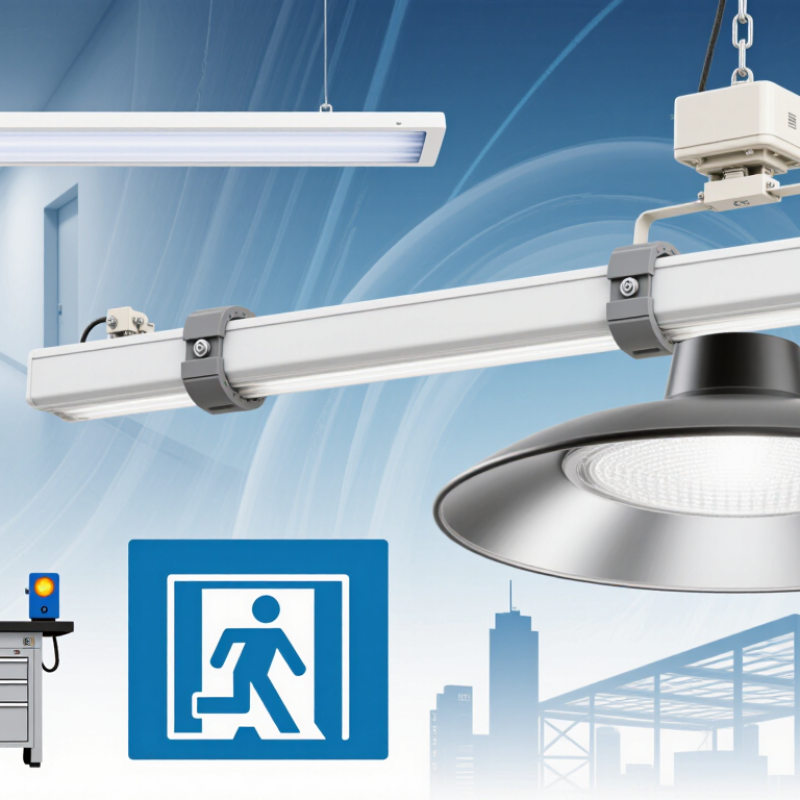
This guide compares the top types of LED tri-proof lights, including linear battens, vapor-tight fixtures, emergency models, and high-bay designs. Each format serves different mounting heights, operating schedules, and maintenance needs. For example, a low-profile batten may suit a corridor, while a suspended high-bay fixture can better illuminate a tall workshop. The right choice depends on the site, not the product name.
Industry data helps explain why efficient lighting is receiving attention, but it cannot replace a project-specific assessment. Review photometric layouts, electrical compatibility, and installation conditions before choosing. Some product categories overlap, and that can make comparisons messy. That uncertainty deserves attention.
Classify LED Tri-Proof Lights by IEC 60529: IP65, IP66, and IP69
LED Tri-Proof Lights are often grouped by their IP rating, which describes protection against dust and water under IEC 60529. The first digit, 6, means the enclosure is dust-tight. The second digit indicates the tested level of water protection. “Tri-proof” itself is not a precise test rating, so check the product’s stated IP code and test documentation.
IP65 fixtures resist water jets from a nozzle, making them suitable for dusty rooms and routine washdowns with controlled spray. IP66 is tested against more powerful water jets, which can matter in areas exposed to forceful cleaning. IP69 fixtures are designed for high-pressure, high-temperature water jets; confirm the exact test standard, since similar labels may refer to different requirements. That matters. A higher number can look decisive, but it does not prove resistance to every detergent, impact, or installation mistake. In real maintenance settings, cable glands, end caps, and mounting details can become weak points. Check that the rating applies to the complete assembled light, not just its housing. A quick spray test on site may feel reassuring, but it cannot replace verified test results.
Compare IP65–IP69 Ratings for Dust and Water-Jet Protection
LED tri-proof lights are commonly selected for warehouses, parking areas, food-processing spaces, and damp utility rooms. The IP code helps compare protection, but it does not describe every risk. The first digit, 6, means the enclosure is dust-tight under the rating test. The second digit measures water protection.
IP65 resists water jets from a nozzle, making it suitable for routine splashes and cleaning with controlled spray. IP66 is tested against stronger jets, such as water directed at an exposed fitting during washdown.
A hose test is not immersion. IP67 and IP68 cover temporary or continuous immersion under specified conditions; the depth and duration depend on the rating and test agreement. IP69 addresses high-pressure, high-temperature water jets.
Not interchangeable. A light rated IP68 is not automatically suited to hot, forceful cleaning.
Match the rating to the actual cleaning method, not just the room’s dampness. A ceiling-mounted fitting may face spray, while a low fixture near a floor drain could encounter standing water.
Check the product’s test conditions, cable entries, and installation instructions; a poor seal at the connector can undermine enclosure protection. IP ratings also do not confirm resistance to impact, detergents, or corrosion.
That distinction is easy to miss. For demanding washdown areas, confirm chemical compatibility separately and avoid assuming the highest number solves every site problem.
Measure Impact Resistance: IK08 (5 J) to IK10 (20 J)
For LED tri-proof lights, IK ratings describe resistance to mechanical impact. IK08 is tested at 5 joules, while IK10 is tested at 20 joules. The scale is defined under IEC 62262. A higher rating indicates a more demanding impact test, not immunity to damage.
Picture a light mounted beside a workshop doorway, where a cart or tool might strike its cover. An IK08 model may suit areas with occasional, moderate knocks. IK10 can be a more appropriate choice where impacts are more likely or potentially stronger. The test uses a specified impact energy and method. Real impacts can differ in shape, angle, and contact point. That matters.
Do not treat IK as a measure of sealing performance. It does not tell you whether a fixture resists dust or water; check its IP rating separately. Mounting also affects real-world protection: a loose fitting may vibrate or shift when struck. Look at the test documentation, installation conditions, and the likely impact hazards before selecting a rating. A higher IK number can add useful margin, but it may not solve poor placement. That deserves a second look.
Identify Fixture Types: Surface-Mounted, Suspended, and Modular
Surface-mounted LED tri-proof lights sit directly against a ceiling or wall, making them practical in rooms with limited headroom. They suit workshops, utility corridors, and parking areas where equipment must stay out of the way. Check the mounting surface before installation: uneven concrete or poorly sealed cable entries can undermine an otherwise weather-resistant fixture. A tight fit matters.
Suspended models hang from rods, chains, or cables, placing light closer to workbenches and high-ceiling spaces. Their extra clearance can improve access for cleaning, but movement and vibration may need consideration. Secure suspension points and follow the fixture’s installation instructions.
Modular tri-proof lights use separate components, such as a housing, light engine, or replaceable driver. This layout can make maintenance more manageable when a compatible replacement part is available. Compatibility is the catch. Confirm electrical ratings, dimensions, and sealing details before ordering parts; a component that fits physically may not preserve the fixture’s protection. The trade-off is not always neat: modular designs can simplify repairs, yet add choices during specification. Measure the space, note cable-entry locations, and compare how each mounting style affects cleaning and future access.