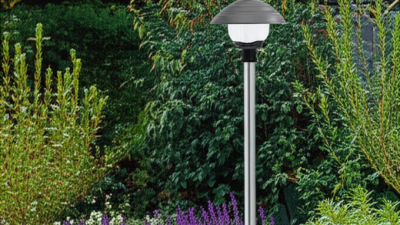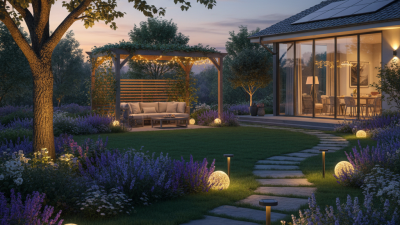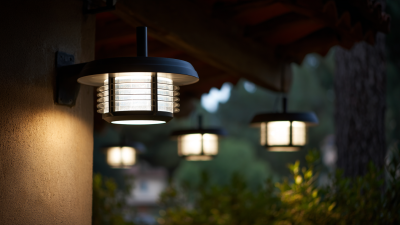
Outdoor Solar Garden Lights have moved from simple decorative stakes to practical products for paths, patios, and planting beds. Buyers now compare more than brightness. Battery capacity, panel efficiency, weather resistance, replacement parts, and after-sales support all matter. For importers and project buyers, choosing a manufacturer means checking these details—not just comparing catalog photos.
The International Renewable Energy Agency reported that global solar power capacity reached about 1,419 gigawatts by the end of 2023, following a record 346-gigawatt increase that year. This figure describes solar power broadly, not garden-light sales. Still, it shows how quickly solar technology is scaling. The International Energy Agency’s Fatih Birol called solar “the new king of electricity markets” in its 2020 World Energy Outlook. His remark concerns electricity markets, rather than outdoor lighting specifically, but it helps explain the wider momentum behind solar products.
For garden lights, that momentum has practical limits. A small panel shaded by a fence may not fully charge a battery, even on a bright day. Cold nights can also reduce battery performance. These details separate dependable products from attractive samples. They are easy to miss.
This guide to China’s top outdoor solar garden lights manufacturers focuses on product specifications, manufacturing capabilities, quality controls, and sourcing considerations. Buyers should request test records and clarify warranty terms before placing large orders. No manufacturer is right for every project. Supplier claims also deserve independent checking. Industry reports describe broad trends; they cannot confirm how a particular light performs in a real garden.
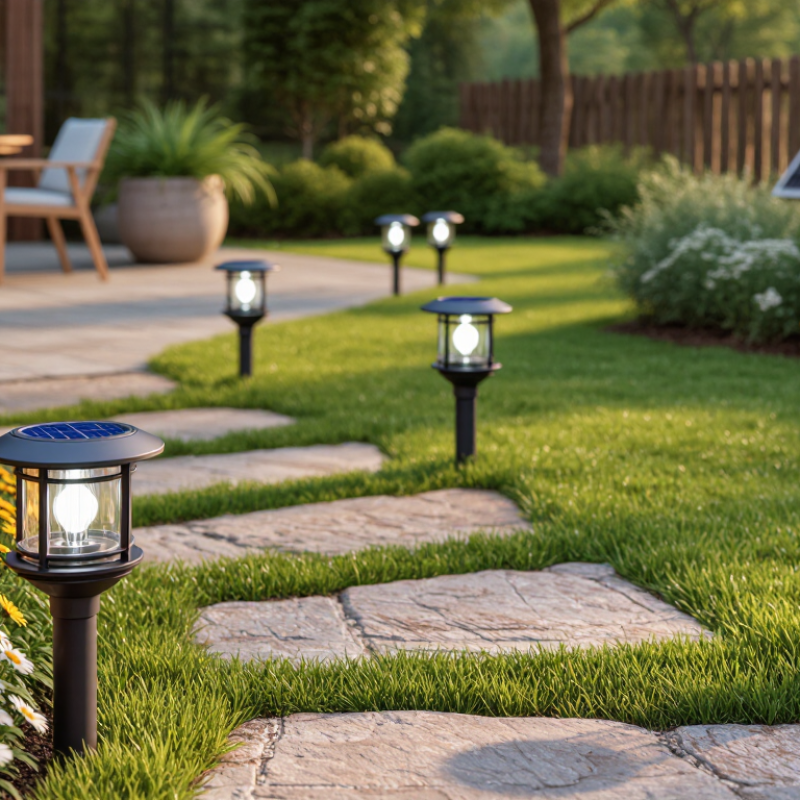
China’s outdoor solar garden light industry brings together lighting design, photovoltaic components, battery assembly, and outdoor product manufacturing. Many factories serve both domestic and export markets, producing path lights, stake lights, wall fixtures, and decorative lanterns. The range is broad. A small path light may use a compact solar panel, a rechargeable battery, and a few LEDs, while larger fixtures need more careful thermal and structural design.
Production often depends on a network of component suppliers. Manufacturers select panels, batteries, control boards, housings, and seals to meet a product’s intended price and use. In practice, these choices involve trade-offs. A larger battery can extend operation, but it also adds cost and weight. Rain resistance, corrosion protection, and stable light output matter in gardens exposed to changing weather. Testing should reflect actual use, not only a brief indoor check.
The industry has grown around flexible production and a wide choice of materials and designs. Buyers commonly compare charging time, runtime, brightness, battery replacement options, and protection ratings. These details are more useful than decorative claims alone. Quality can still vary between models, even within one product category. That deserves attention. Solar garden lights also depend on sunlight, so shade, winter days, and cloudy weather can reduce performance; no specification can erase that limitation.
Solar garden lights come in several forms, each suited to a different outdoor task. Path lights mark walkways and garden edges, while spotlights highlight a tree, wall, or planting bed. For borders, choose fixtures with wide, even light rather than a narrow beam. Small details matter.
Wall-mounted lights work well near gates, sheds, and seating areas. Decorative lanterns add a soft glow, but may provide less useful light for walking. Some models have a separate solar panel, which helps when the fixture sits in shade. Not always.
Key features include panel size, battery capacity, brightness, and weather resistance. Check whether the light has a replaceable battery and whether its panel can receive several hours of direct sun. A bright rating alone does not guarantee long evening runtime. Cold, cloudy days can reduce charging, and shaded corners often disappoint.
The honest trade-off is simple: placement matters as much as the fixture itself.
Designing outdoor solar garden lights starts with the site. Engineers consider daily sunlight, shade, mounting height, and the hours of illumination people expect. These details guide the choice of panel, rechargeable battery, and LED output. A larger battery may extend evening lighting, but it can also increase cost and enclosure size. Balance matters.
In production, teams typically check incoming panels, batteries, circuit boards, and housings before assembly. Workers connect the charging circuit and LEDs, then fit parts into weather-resistant enclosures. Gaskets, cable openings, and lens alignment need close attention; one poorly seated seal can invite moisture.
Small details count.
Sample units can be tested for charging, light output, and operation after simulated exposure to rain and temperature changes. Results should be recorded, not just judged by appearance.
Reliable design also depends on honest limits. Shade, winter daylight, dust, and aging batteries can reduce runtime, even when a lamp performs well in factory tests. Manufacturers can improve consistency through batch checks and clear component specifications, but no single test captures every garden condition.
That gap deserves more thought.
A practical product is not simply bright on the first night; it should remain serviceable and predictable through ordinary outdoor use.
Leading outdoor solar garden light manufacturers stand out through measurable engineering, not polished catalog images. A useful profile checks panel type, battery capacity, rated light output, operating temperature, and replacement-part availability. The IEA PVPS Trends 2024 report estimated global solar photovoltaic capacity at about 1.6 terawatts by the end of 2023. That growth expands the supply base, but it does not prove that a garden fixture will perform well after months of rain and winter shade.
Look for manufacturers that publish test methods and clear product specifications. A dependable profile should explain how the light handles cloudy-day charging, water exposure, and battery aging. It should also distinguish peak brightness from sustained output. Ask for evidence from outdoor testing, not only laboratory claims. Even then, comparisons can be imperfect: test conditions differ, and a bright first evening tells little about year-two performance.
Tips: Compare the same brightness setting and test location. Check whether the panel receives direct sun, and note how long the light stays on after dusk. Small details matter. A shaded fence can change results sharply. Ask suppliers how batteries and panels can be replaced; that answer often reveals more than a glossy brochure.
| Manufacturer Profile | Typical Product Focus | Common Solar Panel Design | Common Battery Type | Typical Light Output | Typical Operating Time | Outdoor Protection to Confirm | Common Applications | Key Evaluation Points |
|---|---|---|---|---|---|---|---|---|
| Decorative garden-light specialist | Stake lights, pathway markers, lantern-style lights, and decorative accent fixtures | Small integrated crystalline-silicon panel, commonly mounted on the top of the fixture | Rechargeable NiMH or lithium-ion battery, depending on design and price tier | Usually a few lumens to approximately 100 lumens per light; primarily for accent or marker lighting | Often designed for about 6–10 hours after a full charge; actual runtime depends on sunlight, season, and operating mode | Check the stated IP rating, UV resistance, drainage design, and corrosion resistance for outdoor use | Garden borders, walkways, planters, patios, and decorative landscaping | Check light distribution, battery replaceability, finish durability, and performance after cloudy days |
| Pathway and landscape-light manufacturer | Path lights, bollard-style fixtures, step lights, and low-level landscape illumination | Integrated panel or separately positioned panel, depending on fixture shape and installation needs | Rechargeable lithium-ion or lithium iron phosphate battery in some designs | Commonly around 50–300 lumens per fixture, with output varying by optics and brightness setting | Often specified for roughly 6–12 hours; low-output modes can extend operating time | Verify ingress protection, lens sealing, mounting stability, and suitability for the intended climate | Residential paths, driveways, garden edges, and outdoor steps | Review beam angle, spacing guidance, dusk-to-dawn controls, and output consistency across units |
| Solar wall and perimeter-light manufacturer | Wall-mounted garden lights, fence lights, entrance lights, and motion-sensor fixtures | Integrated panel or remote panel connected by a cable to the light body | Rechargeable lithium-ion battery is common in compact sensor-equipped products | Varies widely; low steady output may be supplemented by a brighter motion-activated mode | Runtime depends on sensor activity, battery capacity, and standby settings; confirm test conditions in the specification | Check the published IP rating, cable-entry sealing for remote-panel models, and temperature operating range | Garden walls, gates, sheds, entrances, and fence lines | Assess sensor detection range, activation duration, panel orientation, and battery performance in winter |
| Solar string and decorative-light manufacturer | String lights, festoon-style lights, and decorative outdoor lighting sets | Separate panel on a stake or mounting bracket, often connected to the light string by a cable | Rechargeable NiMH or lithium-ion battery in the control unit | Usually intended for decorative ambience rather than task lighting; total output depends on LED count and spacing | Often designed for several hours of evening use after charging; operating time varies with mode and sunlight | Confirm the IP rating of both the light string and controller, as well as connector and cable durability | Patios, pergolas, balconies, garden seating areas, and seasonal decoration | Check string length, bulb spacing, replaceability, charging-panel cable length, and available lighting modes |
| Integrated solar landscape-system manufacturer | Coordinated sets of path, wall, and accent lights with shared design or control features | Integrated or remote panels selected to suit each fixture and its exposure to sunlight | Rechargeable lithium-ion batteries; some product lines may use other rechargeable chemistries | Product-specific, ranging from subtle accent lighting to brighter localized illumination | Must be checked for each fixture and operating mode; connected or synchronized features may affect runtime | Confirm the IP rating and installation requirements for every component in the set | Whole-garden layouts, coordinated pathways, entrances, and outdoor living spaces | Compare charging requirements, replacement parts, control compatibility, and warranty coverage across the range |
When evaluating China’s outdoor solar garden light manufacturers, look beyond quoted lumens and unit price. Ask for the LED’s measured output, solar-panel wattage, battery capacity, and operating time after cloudy days. Request test reports for ingress protection, temperature performance, and battery cycling. Check that the tested model matches the product being quoted; small component changes can affect real-world performance.
The U.S. Department of Energy’s Energy Saver guidance says LED bulbs use at least 75% less energy and last up to 25 times longer than incandescent bulbs. This is an LED technology benchmark, not a guarantee of a solar fixture’s runtime or durability. Compare complete-product specifications instead.
Review warranty terms, replacement-part availability, quality-control records, and sample consistency. A bright sample is useful, but one unit cannot establish batch reliability.
Tips: Ask the supplier to test a sample in your intended location. Record its light output before dawn, after several overcast days. Request dated reports from qualified testing laboratories, and verify model numbers. One detail is easy to miss: attractive specifications may rely on ideal sunlight. Ask what changes when winter days are short.