
How to Calculate Tyre Pyrolysis Plant Cost?

Tyre Pyrolysis Plant Cost is not a single price tag. It depends on capacity, feedstock preparation, emissions controls, utilities, and the products a plant is designed to recover. A reactor quotation may look attractive. The installed project can tell a different story.

Industry reports help define the scale, but not a universal equipment price. ETRMA’s 2022 statistics document end-of-life tyre volumes and recovery routes across Europe. The U.S. EPA’s scrap-tire resources also show why local feedstock supply and handling matter. These sources provide context, not turnkey cost benchmarks. Buyers should compare the same capacity, scope, and operating assumptions.

Every detail counts. A shredder, steel-wire handling system, gas-cleaning equipment, storage tanks, and site utilities can change the budget. So can installation, commissioning, and routine maintenance. Dr. M. R. Islam has published research on waste-tyre pyrolysis, but the material supplied for this introduction contains no verifiable cost-specific quotation from him or another named expert. A direct quote should not be invented. That matters for trust.

This guide breaks the estimate into visible cost items and practical questions. Ask what the supplier includes. Check what the site still needs. Then test the assumptions against local conditions. One figure can mislead. Even a careful estimate needs review.
How to Calculate Tyre Pyrolysis Plant Cost?

Identify the Plant Capacity and Pyrolysis Technology

How to Calculate Tyre Pyrolysis Plant Cost?
Identify the Plant Capacity and Pyrolysis Technology

Start with dependable feedstock, not a headline capacity. The U.S. Environmental Protection Agency’s 2019 Scrap Tire Markets report estimated about 290 million scrap tyres generated annually in the United States. That figure describes a national market, not material available to one site. Check local collection volumes, tyre type, moisture, and transport distance before sizing equipment. A plant designed for 20 tonnes per day needs steady supply, not occasional bulk deliveries.

Next, compare process designs against your target throughput and operating schedule. Batch systems may suit smaller or variable feedstock streams, but loading, cooling, and unloading can limit daily output. Continuous systems can process material more steadily, yet require tighter feed preparation and more complex controls. The European Tyre and Rubber Manufacturers’ Association reported roughly 3.9 million tonnes of end-of-life tyres managed in Europe in 2022; regional recovery rates do not guarantee pyrolysis feedstock. Ask suppliers for independently verified throughput, energy use, maintenance intervals, and product-quality data. A polished capacity number can still mislead.

Tips: Calculate cost using tonnes actually processed per year, not nameplate capacity. Request separate estimates for the reactor, emissions controls, utilities, storage, and installation. Then test a lower-utilization case. It may feel overly cautious, but downtime is real.

List the Main Equipment and Installation Requirements

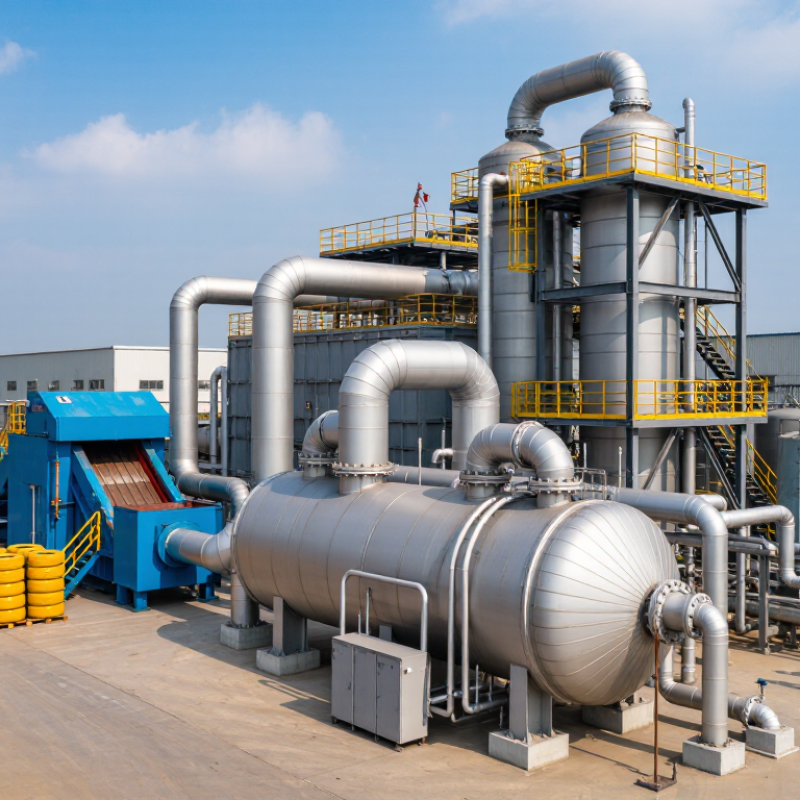
A tyre pyrolysis plant cost estimate should begin with its process route and design capacity. The equipment list usually includes a tyre cutter or shredder, feed conveyors, a sealed reactor, heating system, condensers, oil tanks, gas handling equipment, and char cooling and discharge units. Add steel-wire separation, dust collection, process controls, and suitable fire-safety systems. ETRMA’s 2023 end-of-life tyre report estimates that Europe generated about 3.9 million tonnes of end-of-life tyres in 2022. That scale makes dependable feed handling and storage important cost items, not minor accessories. Small details matter.

Installation costs need their own line items. Include foundations sized for the reactor and rotating equipment, structural steel, electrical cabinets and cabling, piping, insulation, drainage, and utility connections. Allow for cranes, transport, commissioning, and operator training. The final amount changes with throughput, batch or continuous operation, incoming tyre size, and local site conditions. Ask suppliers to state what their quotation excludes. Civil works and emissions-control equipment are often treated differently between proposals, making comparisons misleading. A site survey can reveal weak ground, limited power capacity, or awkward truck access before construction begins. Even then, estimates carry uncertainty: actual installation hours may exceed a neat spreadsheet allowance.

Estimate Land, Utilities, Labor, and Permit Costs

Land cost depends on location, zoning, soil condition, and truck access. Compare recent industrial-property sales, then price the usable area—not just the plot boundary. A two-acre site may still feel tight once storage, fire lanes, drainage, and turning space are drawn in. Measure twice.

Utilities can shift the budget sharply. The U.S. Energy Information Administration reported an average industrial electricity price of about 8.14 cents per kilowatt-hour in 2023. Treat that as a benchmark, not a local quote: connection charges, peak demand, and supply upgrades vary. List each motor, cooling pump, and operating hour, then ask the utility for a load review. Include water, wastewater, and backup power estimates too.

Labor budgets should include more than operators’ wages. The U.S. Bureau of Labor Statistics reported a 2024 median annual wage of $63,510 for industrial machinery mechanics. A small facility may also need shift coverage, safety training, maintenance support, and payroll taxes. Permit costs are site-specific. Air emissions, stormwater, wastewater, and fire-safety reviews may require separate applications or technical studies. Request written fee estimates from local agencies and environmental consultants before fixing the budget. One uncomfortable detail: review delays can keep financing and site costs accumulating, even when equipment is ready.

Calculate Operating Costs and Contingency Allowances

Estimate operating costs from actual plant duty, not a generic cost-per-tonne figure. Calculate electricity use by multiplying each motor’s rated kilowatts by its expected load and operating hours. Then apply the local tariff. The U.S. Energy Information Administration reported an average industrial electricity price of about 8.1 cents per kilowatt-hour in 2023; use it only as a comparison, not a local quote. Add shift wages, maintenance parts, cooling-water treatment, emissions-control consumables, and residue handling. Small items add up.

Build a monthly model using realistic operating hours, planned shutdowns, and feedstock moisture or contamination. A 24-hour schedule on paper may not survive changeovers, cleaning, or equipment faults. Track costs per operating hour and per tonne of input, and keep product revenue separate from gross operating expense. This makes assumptions easier to challenge.

Add contingency as a risk-based allowance, not an automatic percentage. AACE International’s Recommended Practice 18R-97 links estimate classification to project definition, supporting larger uncertainty allowances when design and operating data remain limited. List the risks: power-price changes, delayed spare parts, lower throughput, and unexpected wear on seals or pumps. Price each risk where possible, then show a low, expected, and high case. The estimate may still miss something; that is exactly why assumptions should remain visible.

Compare Total Costs Across Plant Configurations

Tyre pyrolysis plant cost is easier to compare when each configuration is priced on the same operating basis.

A batch system may require a lower initial equipment budget, but it relies on repeated loading, heating, cooling, and unloading. That cycle can mean more handling time and uneven daily output.

A semi-continuous line can reduce pauses by feeding material in stages, while adding conveyors, controls, and maintenance points.

Continuous systems may support steadier throughput, yet usually require stronger process integration and a larger installation budget.

Small detail, real cost. Bigger is not automatically cheaper per tonne.

Compare more than the reactor price.

Request itemized figures for tyre preparation, the reactor and heating system, condensers, gas cleaning, storage, electrical works, foundations, installation, and commissioning. Also compare feed size, moisture assumptions, annual operating hours, and product handling scope.

A quote that excludes civil works can look attractive until the site is prepared.

That matters.

Ask how staffing, spare parts, utilities, and planned shutdowns affect annual costs. Estimate cost per tonne using realistic uptime, not nameplate capacity alone.

Uptime assumptions can be optimistic, so check service records or reference operating data where available. Keep a contingency for site changes.

Go to Top