10 Essential Tips for Choosing Solar Pole Lights for Your Outdoors?
Solar Pole Lights have become increasingly popular in outdoor settings. According to a report by the Solar Energy Industries Association, solar-powered lighting contributed to a 34% increase in residential solar installations in 2022. These fixtures offer an eco-friendly solution to illuminate backyards, paths, and gardens. They are energy-efficient and reduce electricity costs over time.
When choosing Solar Pole Lights, factors such as brightness, design, and battery life are crucial. Different models offer varied lumens, typically ranging from 100 to 1000. You may find some lights that fail to provide adequate illumination. It's essential to consider the solar panel size too, as it impacts charging efficiency.
Moreover, weather resistance is a significant factor. Look for lights with a durable outdoor rating. Some users have reported issues with lights that do not withstand harsh conditions. Balance aesthetics with functionality to find the right solution. The right choice can enhance your outdoor environment while minimizing your carbon footprint.
Consider Your Outdoor Space Size and Lighting Needs
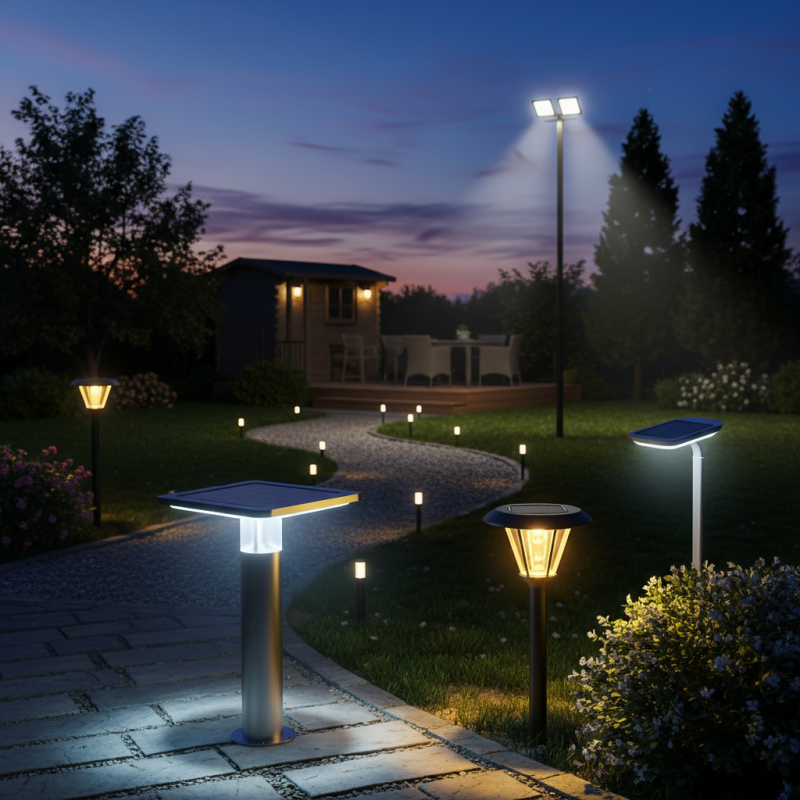
When choosing solar pole lights, consider the size of your outdoor space. A small yard may only need a couple of lights. In contrast, a larger area could require multiple fixtures to ensure full coverage. Think about the layout too. Pathways need different lighting than patios or gardens. Measure the areas before purchasing lights.
Assess your lighting needs. Some spaces might benefit from soft, ambient light. Others require focused, bright illumination for safety. For example, if you have a deck, task lighting might be essential. Look at how often you use the space at night. Are there dark corners that need attention? Assessing these details can guide your choice.
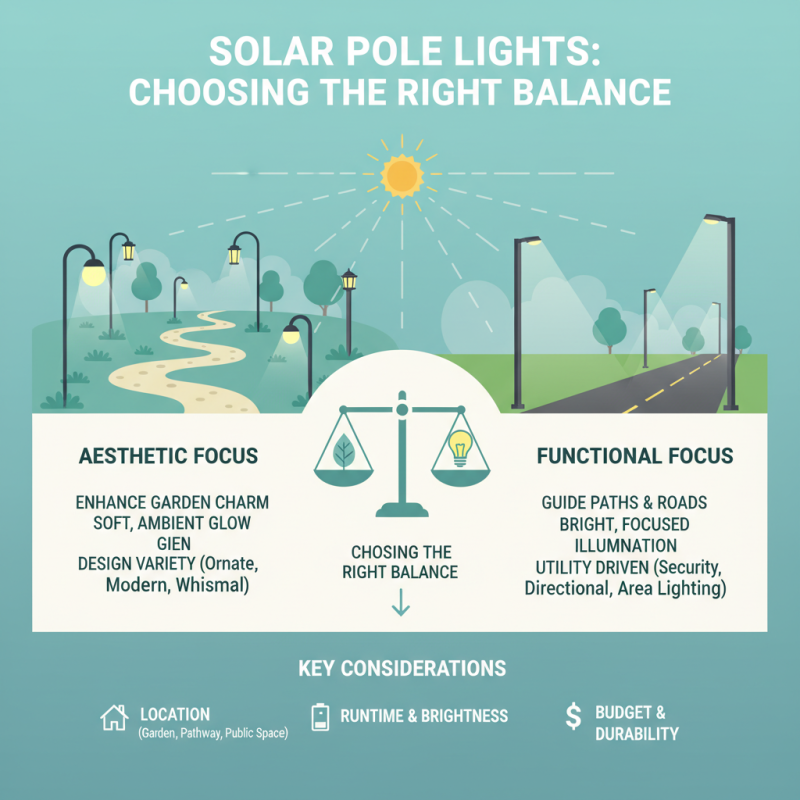
Take time to reflect on your aesthetic preferences as well. Solar lights come in various styles. Some may clash with your landscape. The materials can impact the light's longevity, too. Balance beauty with functionality. It’s easy to overlook how these choices impact your outdoor experience. Don’t rush. Be patient in finding the right match for your home.
Evaluate Different Types of Solar Pole Lights Available
When evaluating different types of solar pole lights, you’ll find a variety of options to consider. Each type comes with its own set of features and benefits. For instance, some lights are designed for aesthetic purposes, while others focus on functionality. Pathway lights can guide your way, while decorative options enhance your garden's charm. Choosing the right balance is crucial.
It's also important to consider the material of the solar pole lights. Metal options are durable but may rust over time. Plastic models are lighter and often more affordable but can fade with sun exposure. The light intensity varies across different products, affecting how well they illuminate your outdoor space. Not every light will last through challenging weather, which could lead to disappointment.
Moreover, pay attention to the installation process. Some models require complex assembly, while others are straightforward and user-friendly. A light that’s difficult to set up might discourage you from using it. Think about how much maintenance you are willing to commit. Regular cleaning and checks will ensure longevity. The variety can be overwhelming, but understanding these aspects will lead you to a more informed decision.
Check the Solar Panel Efficiency and Battery Storage Capacity
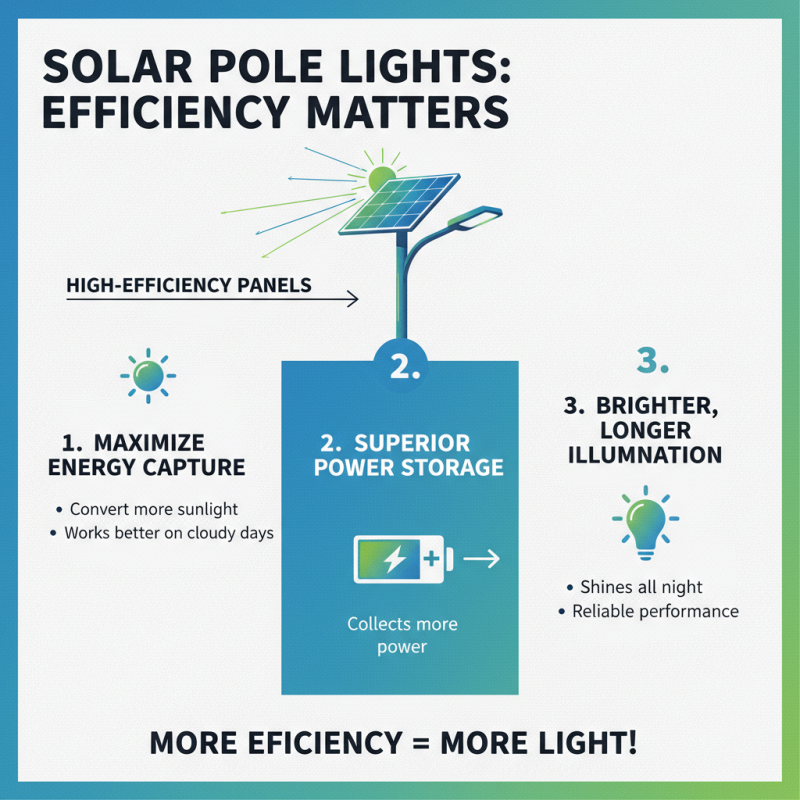
When selecting solar pole lights, one of the key factors is solar panel efficiency. Efficient solar panels convert sunlight into energy effectively. Look for panels with high efficiency ratings. Higher efficiency means they collect more energy, even on cloudy days. Thus, your lights can shine brightly for longer periods.
Battery storage capacity is equally important. A larger battery stores more energy. This allows the lights to function during the night or on rainy days. Check the capacity in amp-hours. If the battery is small, expect shorter illumination times. You might find yourself disappointed if the lights turn off early.
Some tips to consider: Choose lights with replaceable batteries. It’s frustrating when integrated batteries fail. Additionally, pay attention to installation locations. If trees or buildings block sunlight, your efficiency will drop. Lastly, think about the weather. Harsh conditions can affect both panels and batteries. Choose durable materials to withstand these challenges.
Assess Durability and Weather Resistance Features
When choosing solar pole lights for your outdoors, durability and weather resistance are crucial. These lights face various elements like rain, snow, wind, and UV rays. You want products that can withstand all those challenges. Look for materials like aluminum or high-quality plastic. They often offer better resistance to corrosion and fading. Also, thick glass lenses can protect against impact. Dimensions matter too; larger fixtures tend to last longer.
Another key feature is the IP rating. An IP rating indicates how well a light can resist water and dust. Ratings like IP65 or higher suggest better protection. Remember that cheaper options might not hold up well. Over time, they can fade or break down. Check reviews to see how long-lasting products are under real-world conditions. It's also wise to assess warranty offers. A solid warranty reflects a manufacturer’s confidence in their quality.
10 Essential Tips for Choosing Solar Pole Lights for Your Outdoors
| Feature |
Importance |
Recommended Specifications |
Common Materials |
| Durability |
Ensures long lifespan |
At least 5 years |
Aluminum, Stainless Steel |
| Weather Resistance |
Withstands harsh conditions |
IP65 rating or higher |
Polycarbonate, Glass |
| Brightness |
Affects visibility and security |
100-300 lumens |
LEDs |
| Battery Capacity |
Determines the runtime |
Li-ion, at least 2400 mAh |
Lithium-ion |
| Solar Panel Efficiency |
Impacts charging time |
Over 18% |
Monocrystalline |
| Mounting Options |
Ease of installation |
Adjustable or fixed |
Mounting brackets, spikes |
| Design |
Affects aesthetic appeal |
Sleek and modern |
Various finishes |
| Price |
Fits budget |
$50 - $200 |
Cost vs. features |
| Warranty |
Ensures quality |
At least 1-3 years |
Manufacturer's warranty |
| User Reviews |
Guides purchase decisions |
4 stars and above |
Consumer feedback |
Review Installation Requirements and Maintenance Tips
When considering solar pole lights for your outdoor space, installation requirements are key. Most solar lights are designed for DIY installation. However, a few factors can complicate the process. Ensure you assess the location and angle of the lights. Too much shade from nearby trees can block the sunlight necessary for charging. Positioning is crucial. You may need to trim branches or choose a different spot.
Maintenance is another significant aspect. Solar lights require occasional cleaning to ensure optimal performance. Dust and debris accumulate on the solar panels, reducing efficiency. A simple wipe with a damp cloth can do wonders. It’s also wise to examine batteries yearly. They may need replacement after some time. Although solar lights are low-maintenance, neglecting them can lead to poor performance. Consider keeping a maintenance schedule to avoid frustration when you need illumination the most.