How to Choose the Best Smart Parking System for Your Business
Choosing the right Smart Parking System is an operational decision, not just a technology purchase. It affects how drivers find spaces, how staff manage demand, and how reliably revenue is recorded. INRIX’s 2023 Global Traffic Scorecard estimated that U.S. drivers lost an average of 42 hours to traffic congestion that year. That figure measures congestion broadly, not time spent searching for parking alone. Still, it shows why smoother arrivals matter. Small changes matter.
For a business, the best choice depends on the site. A hospital, hotel, and office garage face different peak periods and user needs. Compare sensor accuracy, payment options, accessible-space guidance, software integrations, customer support, and system uptime. Picture a busy entrance at 8:30 a.m.: if a display points drivers toward a full level, trust drops quickly. A polished dashboard cannot fix poor data. Nor should a vendor’s forecast replace a measured pilot.
Ask suppliers how they verify occupancy, handle outages, and protect customer information. Request references from sites similar to yours, then test the system during real operating hours. Check total costs, including installation, connectivity, maintenance, and staff training. There is no perfect dashboard. Some benefits may take longer to prove than a sales presentation suggests. A careful comparison of practical performance, clear evidence, and long-term costs can help you choose a system that fits your business—not simply the most impressive demonstration.
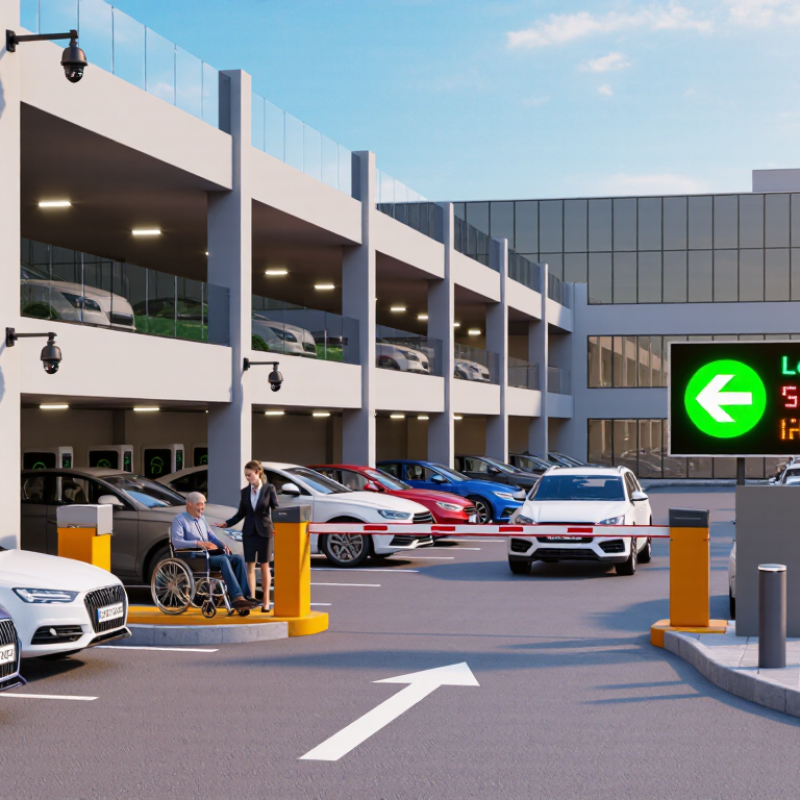
Assess Your Business’s Parking Needs and Current Operations
Before comparing smart parking systems, map how your lot works on an ordinary Tuesday and during a busy event. Record arrival and departure patterns in 15-minute intervals for at least a week. Note queues at the gate, full aisles, unused spaces, and times attendants answer the same questions. Count spaces by type, including accessible, reserved, visitor, and loading areas. Ask who parks there, how long they stay, and which rules cause confusion. Small details matter. A five-minute entry delay can spill onto the street.
Review existing tools and handoffs, not just hardware. Check how permits are issued, payments reconciled, occupancy shared with reception, and issues handled by staff. Write down recurring manual work and where records become inaccurate. Your first estimate may be wrong; sensors can reveal a different pattern than staff recall. That is useful, not embarrassing. Compare notes across weekdays, shifts, and seasonal peaks before setting requirements. Also identify constraints such as power, network coverage, lighting, and maintenance access. A system that fits a spreadsheet may still frustrate drivers at a narrow entrance. Define measurable improvements, such as shorter queues or fewer calls, and leave room to revise those targets.
Define the Requirements a Smart Parking System Must Meet
Start with the actual parking problem, not a feature list. Count spaces, peak arrivals, average stay, and the number of drivers who need accessible bays. A clinic may need quick turnover near its entrance, while an office may prioritize reserved spaces during morning arrivals. Record how staff handle full lots and disputes today. These details shape useful requirements.
Set measurable targets for the system. For example, occupancy data should update quickly enough to guide drivers before they reach a full entrance. Test sensors in rain, poor lighting, and busy traffic; a neat dashboard cannot reveal every missed vehicle. That matters. Specify how drivers enter, pay, and receive directions, including what happens when a phone has no signal. Keep the process simple for visitors who do not use apps.
Reliability and support deserve equal attention. Ask how the system behaves during a network outage, how quickly service issues are answered, and whether data can be exported in a common format. Limit collected information to what operations genuinely require, and define who can access it. Check that signs, payment steps, and guidance work for people with different mobility needs. A short pilot across peak and quiet periods can expose flaws. Some assumptions will still be wrong; revise the requirements before committing to a full rollout.
Compare Detection Technologies, Software, and Core Features
Choosing a smart parking system starts with matching detection to the site, not chasing the newest hardware. Ultrasonic sensors suit covered garages, where ceiling-mounted units can track individual bays. Magnetometers work in outdoor stalls, though paving work and metal interference can complicate installation. Cameras can cover several spaces at once, but glare, rain, and privacy settings need careful testing. Test at night and during peak turnover. Small pilots matter.
Software matters as much as sensors. Look for live occupancy, clear maps, access and payment integrations, fault alerts, and hourly utilization reports. Check documented uptime, offline behavior, data retention controls, and integration options before signing. The San Francisco Municipal Transportation Agency’s 2014 pilot evaluation reported 43% less average parking-search time after a package of parking-management changes. That result is useful, not a guarantee: pricing and guidance changed alongside technology.
Budget for maintenance and calibration, not just installation. Compare cost per monitored space, replacement intervals, and how easily staff can correct false occupancy. A polished dashboard with stale data is a problem. Ask for a month of test data before expanding.
Test Shortlisted Systems Before Making a Final Selection
How to Choose the Best Smart Parking System for Your Business
Before making a final selection, test each shortlisted system in your own parking facility, not just in a polished demonstration. Real conditions expose gaps.
INRIX’s 2017 Parking Pain study estimated that U.S. drivers spent an average of 17 hours a year searching for parking; the figure for U.K. drivers was 44 hours. These are older, market-specific estimates, not guarantees of what your site will experience. Still, they show why a pilot should measure real arrival times, space availability, and time spent entering and leaving.
Run the test during both busy and quiet periods. Check whether sensors report occupied spaces accurately when vehicles park unevenly, and whether signs update quickly enough to guide drivers. Record failed payments, queue lengths, and staff time spent fixing errors. Test the system with your existing gates, payment tools, and reporting software. Ask staff to use it without a vendor guiding every step. That part can feel awkward, but it reveals training needs. Compare results against your current process, and agree on success thresholds before the trial begins. Also review what data the system collects, how long it retains that data, and who can access it.