
Choosing Natural Raffia Bags for wholesale is not just a matter of color or price. Buyers need to assess the weave, handle attachment, dimensions, finish, and consistency across a production run. A bag may look sturdy in a product photo, then feel loose when packed with a notebook and water bottle. Details matter. Ask for a physical sample, check its measurements, and inspect the seams and handles under normal use. Natural fibers can vary in tone and texture, so a perfectly identical batch may not be realistic. That deserves a clear conversation before an order is placed.
An illustrative sourcing specialist, Elena Ward, offers this editorial reminder: “A good wholesale sample should tell you how the bag feels, not just how it photographs.” This is a guiding line created for this introduction, not a verified quotation from a published interview. It points to a practical habit: compare samples with your intended use, packaging, and customer expectations. Ask suppliers how they control sizing, finishing, and quality checks, and request written specifications for repeat orders. A low unit price can still bring extra work if handles vary or dimensions drift. Even careful checks have limits. Raffia is a natural material, and some variation is part of its character; the goal is to understand what is acceptable before scaling up.
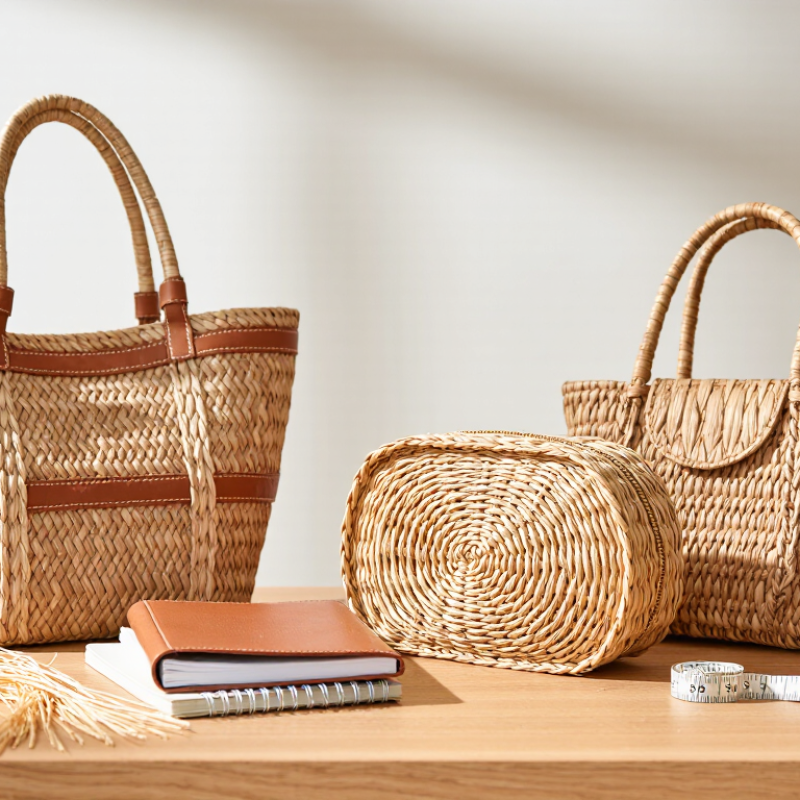
Natural raffia is not a single, uniform material. It usually refers to fibers taken from the leaves of raffia palms, but the palm species and growing region can affect color, length, and flexibility. Ask suppliers to identify the palm source rather than relying on “natural” alone. That distinction matters.
The material may arrive as narrow leaf strips, prepared fiber, or twisted raffia yarn. These forms behave differently in a bag. Flat strips can create a crisp, visible weave, while softer yarn may feel more flexible and show a finer texture. Check a physical sample: run your fingers over the surface, look for uneven widths, and bend the weave gently. Some variation is normal. Too much can make production inconsistent.
For wholesale orders, request clear details about fiber preparation and whether the bag includes non-raffia components, such as fabric linings or synthetic thread. Compare samples from more than one production batch when possible. A pale strand may darken slightly with exposure, and natural fibers rarely match perfectly. I would not treat every shade difference as a defect, though it is worth defining acceptable variation before confirming quantities.
Color can reveal how carefully raffia has been sorted and stored. Look for a natural, reasonably even tone across strands, while allowing for small variations. A few deeper or lighter fibers are normal. Large patches of discoloration, damp-looking spots, or a musty smell deserve closer inspection. Uniform does not mean identical.
Flex each strand gently. Good raffia should bend without snapping or feeling brittle, yet hold enough structure for weaving. Compare several bags from different bundles, not just one attractive sample. Check whether strand thickness and weave density remain consistent. Loose joins, sharp ends, broken fibers, and visible gaps can affect both appearance and durability. Defects happen; the useful question is how often they appear across the batch.
Tips: Request samples from multiple bundles and inspect them in daylight. Note color variation, breakage, and loose weaving before approving an order. Repeat the check when production arrives; a sample can look better than the wider lot. That difference is easy to overlook.
When comparing natural raffia bags for wholesale, inspect weave density across several samples, not just one. A tight, even weave usually holds its shape better and leaves fewer visible gaps. Hold each bag toward a light source. Small variations are normal, but loose sections near the base may weaken with use. Very dense weaving can also make a bag heavier and less flexible.
Check dimensions when the bag is empty and when it is filled with typical items. A difference of a few centimeters can affect how it sits on a shelf or fits everyday essentials. Measure handle drop as well as handle width. Handles should feel comfortable over the shoulder and remain securely attached when the bag carries a modest load. Test them. A quick pull is useful, though it cannot predict every strain in daily use.
Ask whether the lining is sewn in evenly, especially around corners and pockets. A light lining may preserve the bag’s natural texture, while a heavier one can add structure and weight. Review the finish closely: loose fibers, uneven edging, or rough seams can signal inconsistent production. Raffia is a natural material, so small color and texture differences may remain between batches. This can look appealing, but it complicates uniform displays. Request samples from the intended production run when possible, and compare them under the same lighting.
Compare weave density, bag dimensions, handles, linings, and finish before placing a bulk order.
How to read the chart: These are suggested relative inspection-priority scores on a 1–5 scale, not measured industry data. Check weave consistency and handle attachment closely; confirm dimensions against your intended use, and specify lining and finishing details in the order requirements.
When sourcing natural raffia bags wholesale, ask how the material and handles were tested, not just whether a sample feels sturdy. ISO 13934-1 measures fabric tensile strength and elongation using the strip method. For raffia, the laboratory should confirm that the woven construction is suitable for this method. Test representative panels and, where possible, handle material separately. A strong body does not prove a strong handle. Small detail, big consequence.
Review the reported force, elongation, specimen direction, and sample location. These details help compare suppliers and production batches fairly. ISO 105-X12 evaluates colorfastness to rubbing, using dry and wet rubbing tests to check color transfer. Ask for results on the actual dyed raffia, since shade and surface texture can vary. Wet rubbing matters when bags may meet damp hands or clothing. Still, this test does not predict fading in sunlight or color transfer during washing.
Request dated reports linked to the sample or batch being purchased. A pass result is useful, but it is not a promise that every finished bag will perform identically. Natural fibers vary; that is part of their appeal, and sometimes their weak point. I would also inspect seams and strap attachments by hand, because standardized fabric tests do not cover every finished-bag failure.
For natural raffia bags, a low quoted unit price can hide costs in trims, packing, or rejected pieces. Ask for MOQ by style, color, and handle option; mixed designs may count as separate production lots. A smaller MOQ can help test demand, but setup costs are spread across fewer bags. Small runs cost more.
Compare quotes using the same specifications, including bag dimensions, lining, closure, and packaging. Ask whether the unit cost changes at higher quantities, and whether samples or custom labels are charged separately. Confirm the payment schedule and what happens if a sample differs from the approved details. A spreadsheet helps, though it can make uncertain dates look more exact than they are.
Lead time should show sample approval, material preparation, production, and packing separately. Request a realistic shipping-ready date, not just a factory estimate. For quality control, agree on measurable checks: dimensions, handle attachment, weave consistency, and acceptable color variation. Ask when inspections happen and how defects are documented or corrected. Natural fibers vary. That matters. Not every shade will match perfectly, so define tolerances before production rather than relying on a broad promise of “good quality.” Recheck the terms after any design change; a small adjustment may affect cost or timing.