
10 Best Intelligent Pole Suppliers for Global Buyers

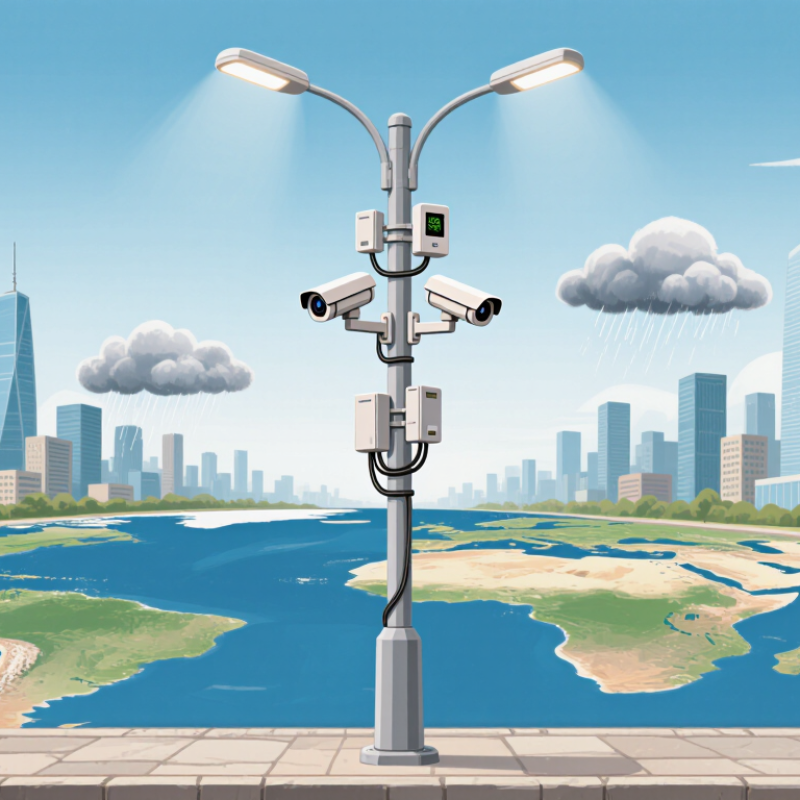
An Intelligent Pole can combine street lighting, cameras, environmental sensors, public Wi-Fi, and other connected equipment on one structure. For global buyers, the challenge is not simply finding a supplier with an impressive product image. It is confirming that the design fits local infrastructure, climate, connectivity, and maintenance needs.

This guide introduces ten Intelligent Pole suppliers for buyers comparing options across markets. It highlights practical questions: Can the pole support the required equipment and cable routing? Are materials and coatings suited to coastal air, heavy rain, or high temperatures? Can lighting controls, sensors, and network components work together without locking the buyer into one system? These details matter when a unit must serve reliably for years, not just look convincing in a proposal.

Ask for technical drawings, load calculations, sample project references, warranty terms, and clear explanations of installation support. Check how spare parts are sourced and whether remote monitoring depends on specific software or network providers. Requirements differ by country and project, so buyers should verify applicable standards with qualified local professionals. A supplier’s published specifications are useful, but they do not replace independent checks or a site assessment.

Some comparisons will remain imperfect. Public information may be uneven, and a strong portfolio does not guarantee a good fit for every project. That is worth remembering. The right supplier is usually the one that can explain trade-offs plainly, provide evidence, and support the pole after installation.
10 Best Intelligent Pole Suppliers for Global Buyers

What Intelligent Poles Are and How They Support Smart Cities

An intelligent pole is a streetlight structure that can host connected equipment for city services. It may combine LED lighting, wireless communication, environmental sensors, and traffic-monitoring devices. The exact configuration depends on local needs, power supply, and network coverage. At street level, a pole might dim its light when a road is empty, then brighten as pedestrians approach. A nearby sensor could also record temperature or airborne particle levels. Not just lighting. Together, these functions help city teams understand changing street conditions and manage infrastructure more efficiently.

For smart cities, poles offer useful mounting points where power and connectivity are already available. This can reduce the need for separate roadside installations, though upgrades still require careful planning. Teams should check equipment compatibility, maintenance access, data quality, and how collected information will be protected. A sensor reading is not automatically a reliable measure of an entire neighborhood. That matters. Intelligent poles can support safer crossings, quicker fault detection, and more informed planning, but only when their data is reviewed and acted upon. Integration is not progress by itself; sometimes a simpler, well-maintained lighting system is the better choice. Cities benefit most when each added device solves a clear, measurable problem.

How to Assess Intelligent Pole Suppliers for Global Projects

When assessing intelligent pole suppliers for global projects, compare evidence, not showroom claims. UN DESA’s World Urbanization Prospects: The 2018 Revision projects that 68% of the world’s population will live in urban areas by 2050. Scalable maintenance and replacement planning are therefore essential. Ask suppliers for pole-load calculations, wind-rating assumptions, ingress-protection test reports, and operating-temperature limits. Check whether lighting, sensors, cameras, and gateways can be replaced separately. A sealed unit may look elegant. It can also become an expensive failure point.

Connectivity needs equal scrutiny. ITU’s Facts and Figures 2023 estimated that 5.4 billion people, or 67% of the global population, used the internet. Confirm network compatibility in each project location, plus data ownership, firmware-update commitments, cybersecurity procedures, and spare-parts availability. Request service-level details with response times, not just broad warranty promises. Then compare total lifecycle costs across suppliers. A low purchase price can hide costly maintenance. I would still question any estimate that lacks clear assumptions.

Tips: Run a field pilot on one pole before scaling up. Track energy use, uptime, installation hours, and fault response. Do not trust a dashboard alone.

10 Best Intelligent Pole Suppliers for Global Buyers - How to Assess Intelligent Pole Suppliers for Global Projects

Use this evidence-based scorecard to compare shortlisted suppliers. The criteria and weighting are a suggested procurement framework, not a ranking of named companies. Score each supplier from 1 (weak or no evidence) to 5 (strong, independently verifiable evidence).

Rank Assessment Dimension Suggested Weight What to Verify Warning Signs
1 Regulatory Compliance and Documentation 15% Request project- and market-specific declarations, test reports, material records, and certificates. Check that certificates are current, cover the relevant product scope, and can be verified with the issuing organization. Generic certificates that do not identify the product, expired documents, or claims of universal compliance without destination-market details.
2 Engineering and Structural Design 14% Review drawings, load calculations, foundation requirements, wind-load assumptions, mounting details, cable routing, access provisions, and documented design-change controls for the project site. Standard designs offered without checking local wind conditions, equipment loads, soil assumptions, or installation constraints.
3 System Integration and Interoperability 13% Confirm interfaces for lighting, cameras, sensors, communications equipment, power, and control software. Request interface specifications and a demonstration using the intended third-party equipment. Closed interfaces, unclear ownership of integration work, or assurances of compatibility without documented testing.
4 Environmental Protection and Durability 12% Check enclosure ingress-protection and impact-protection ratings where applicable, corrosion protection, coating specifications, drainage, thermal management, and suitability for the actual climate and exposure. Ratings stated without test evidence, unspecified coating systems, or no explanation of how heat, moisture, salt, dust, and UV exposure are addressed.
5 Manufacturing Quality and Traceability 10% Inspect quality-control procedures, material and component traceability, welding and coating records where relevant, inspection plans, factory acceptance testing, and sample production records. No documented inspection process, inconsistent product samples, or inability to trace critical components and production batches.
6 Cybersecurity and Data Handling 10% Ask for network architecture, access-control practices, software-update procedures, vulnerability reporting, data-flow documentation, and clarification of data ownership and hosting locations. Shared default credentials, unsupported software, unclear remote access, or no defined process for security updates and incident response.
7 Delivery Capacity and Project Execution 8% Request a realistic production schedule, capacity plan, packaging and shipping details, installation responsibilities, commissioning plan, and evidence of handling comparable project complexity. Unsubstantiated delivery guarantees, no contingency plan, or unclear division of responsibility among supplier, installer, and system integrator.
8 Warranty, Service, and Spare Parts 7% Review warranty coverage and exclusions, service response commitments, spare-parts availability, maintenance instructions, training, and local support arrangements for the intended operating period. Warranty terms that exclude key components, support limited to a distant time zone, or no plan for replacement parts and software maintenance.
9 Total Cost and Contract Clarity 6% Compare the full project cost, including equipment, customization, software, integration, shipping, duties, installation, commissioning, maintenance, and likely replacement items. Check payment and change-order terms. Low headline pricing that omits integration or lifecycle costs, ambiguous deliverables, or undefined charges for software and technical support.
10 Sustainability and End-of-Life Planning 5% Ask for material information, repairability, component replacement options, packaging practices, energy-use data where relevant, and guidance on reuse, recycling, or disposal. Unsupported environmental claims, no material information, or designs that require replacing complete assemblies for routine component failures.
Scoring method: For each dimension, assign a score from 1 to 5. Calculate the weighted score as (score ÷ 5) × suggested weight, then add the results for a total out of 100. Verify claims through documents, product samples, demonstrations, and reference checks before making a purchasing decision. Applicable regulations and technical requirements vary by destination market and project scope.

Capabilities That Set Leading Intelligent Pole Suppliers Apart

Leading intelligent pole suppliers do more than combine a lamp, camera, and wireless radio. They engineer a system that can be installed, monitored, and maintained in real street conditions. The UN’s World Urbanization Prospects: The 2018 Revision projects that 68% of the global population will live in urban areas by 2050. That growth makes adaptable infrastructure valuable. The U.S. Department of Energy’s guidance on LED street lighting notes that LED upgrades can cut energy use by 50% or more compared with conventional lighting. Suppliers should show measured performance, not just attractive renderings.

Strong suppliers document pole loading, corrosion protection, thermal management, and access for repairs. They explain how lighting controls, sensors, and communications equipment work together, and what happens if one component fails. Ask for interoperability details and cybersecurity practices, then check them against your own operating requirements. Small details matter. A neat enclosure can still trap heat; a promising pilot can still lack clear maintenance records. I would treat both as procurement questions, not minor caveats.

Tip: Request a sample bill of materials, test reports, and a maintenance plan for one specific pole configuration. Compare energy claims with a defined baseline, operating hours, and dimming schedule. If those assumptions are missing, the estimate is hard to verify.

10 Intelligent Pole Suppliers for Global Buyers

Global buyers comparing intelligent pole suppliers should assess more than the quoted pole price. Check whether the supplier can integrate LED lighting, cameras, environmental sensors, and communication equipment without overcrowding the pole. Ask for drawings that show cable routes, access panels, and mounting positions. These details affect installation time and later maintenance. Small details matter.

The IEA’s Energy Efficiency 2023 report estimates that lighting uses about 15% of global electricity. The U.S. Department of Energy notes that LEDs use at least 75% less energy than incandescent lighting, though that comparison does not directly predict streetlight savings. Use these figures as context, not as a guaranteed project outcome. Request measured power data, test reports, warranty terms, and clear evidence of component compatibility. Specifications can look impressive on paper; field conditions may tell a less tidy story.

Tips: Ask suppliers for a sample pole layout and a bill of materials. Confirm corrosion protection, wind-load assumptions, spare-part availability, and software update support. Compare total operating costs, not just purchase prices. Then verify key claims with an independent test report.

How to Compare Suppliers and Choose the Right Partner

Choosing an intelligent pole supplier requires more than comparing unit prices. Match each proposal to the project’s pole height, camera and sensor load, local weather exposure, and maintenance plan. Ask for structural calculations, material specifications, coating details, and sample inspection records. A clear drawing should show access panels, cable routes, and equipment mounting points. Small omissions can create costly site changes.

Compare controls and connectivity carefully. Confirm which lighting, monitoring, and communications functions are included, and request a demonstration using the proposed configuration. Check how software updates, fault alerts, and replacement parts are handled. Ask for realistic production and shipping schedules, plus warranty terms in writing. A spreadsheet helps, but it can hide weak service support. I have seen neat quotations leave basic questions unanswered.

Tips: Send every supplier the same project brief. Compare itemized costs, test documents, delivery milestones, and after-sales response times. Ask for a reference project with similar climate and equipment loads. Check one detail twice: stated performance may depend on the final configuration. If answers remain vague, pause before committing.

Go to Top