
7 Best Solar Light Wind Chimes for Outdoor Spaces?

Solar Light Wind Chimes can bring gentle movement and a soft glow to a porch, patio, or garden path. In daylight, colored glass or decorative tubes add visual interest. After sunset, small LEDs create a welcoming accent near a doorway or seating area. The effect depends on more than appearance, though. A shaded branch may leave the solar panel short on charge, while a breezy, exposed spot can make delicate chimes sound louder than expected.

This guide looks at seven options for different outdoor spaces and priorities. It considers practical details such as panel placement, expected lighting, hanging hardware, materials, and the character of each chime’s sound. Product descriptions can help, but brightness and runtime vary with sunlight, season, and battery condition. That matters. A light that looks vivid in a product photo may appear subtle in a real yard. Check dimensions and care instructions before buying, and consider whether the chime’s tones will suit nearby neighbors and your own quiet hours. There is no perfect choice for every setting. A compact design may fit a balcony but feel understated in a large garden; a larger chime may offer stronger presence but need a sturdier hook. The picks ahead aim to make those trade-offs easier to compare, without treating decorative lighting as a replacement for dependable outdoor illumination.
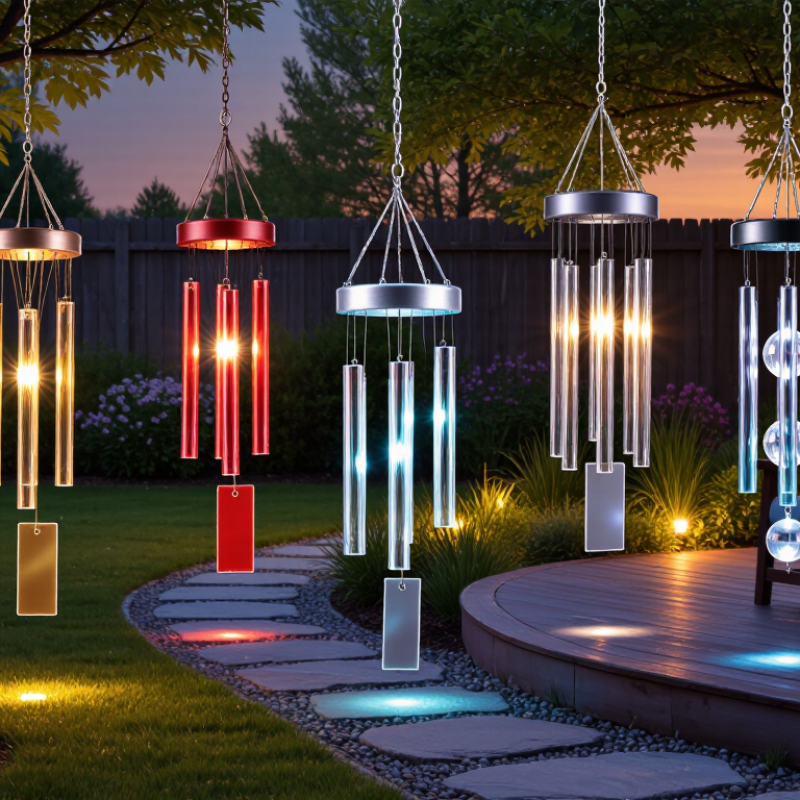
7 Best Solar Light Wind Chimes for Outdoor Spaces?

What Solar Light Wind Chimes Are and How They Work

Solar light wind chimes combine a small photovoltaic panel, a rechargeable battery, LED lights, and hanging tubes or ornaments. The panel converts daylight into electricity and stores some of it in the battery. At dusk, a light sensor usually switches on the LEDs automatically. The chimes themselves do not need sunlight to move or make sound; a breeze sets them in motion.

Simple, but not magic. On a bright patio, the lights may glow for several hours after sunset. Shade, short winter days, or a dirty panel can reduce charging time. Check whether the panel faces open sky, and wipe away dust with a soft cloth when needed. Many designs place the panel near the top, while the battery and light components sit inside the central body. That arrangement can make the chime easy to hang, though it may be awkward to clean.

Light output and sound depend on different things. LED brightness comes from the charged battery, while tone depends on tube material, length, and spacing. A gentle breeze may produce a soft, irregular clink; stronger gusts can make the sound louder. I would not assume every model handles rain equally well. Look for clear weather-resistance details, and bring delicate pieces under cover during severe weather. Check the panel placement, too. A pretty spot under a deep porch roof may be a poor charging spot.

Features That Matter in Outdoor Solar Wind Chimes

Outdoor solar wind chimes need more than a pleasant sound. Check where the small solar panel sits and whether it can face direct sunlight. A shaded porch may leave the light dim or off by evening. Some panels detach for better placement, which is useful when the chime hangs beneath a roof. Look for a rechargeable battery that can be replaced; sealed units may be harder to maintain over time.

Weather resistance matters. Rain, humidity, and strong sun can wear down cords, painted finishes, and plastic parts. A clear description of the materials is more useful than a vague promise of durability. Still, no outdoor finish stays perfect forever. Inspect the hanging line and connections now and then, especially after windy weather. A lightweight chime may move easily, but it can tangle or knock against a wall. Heavier tubes often feel steadier, though their sound may be quieter in a gentle breeze.

Listen for the tone you want. Aluminum tubes usually make brighter notes, while wooden elements tend to sound softer and less uniform. Not every chime rings often. That can be a good thing near a bedroom, but disappointing in a sheltered corner with little airflow. Check whether the light has a timer or dusk sensor, and consider how long it stays illuminated. Small details matter. A simple hook, accessible battery compartment, and easy-to-clean panel can make daily use less frustrating.

Seven Solar Light Wind Chimes for Different Outdoor Spaces

Solar light wind chimes suit different spaces when their size, sound, and charging position match the setting. The IEA’s Renewables 2023 report recorded nearly 510 GW of renewable capacity additions worldwide in 2023, with solar photovoltaic power making up about three-quarters. That growth is impressive, but a shaded porch still gets little useful sunlight. NREL’s PVWatts tool also accounts for location and system orientation when estimating solar output.

For a narrow balcony, choose a compact chime with a small solar panel and gentle light.

A covered porch needs a model with a separately positioned panel, if available.

On a patio, larger tubes can carry sound without crowding seating.

A pergola suits several small lights rather than one harsh glow.

Near flower beds, soft LEDs can mark an edge without washing out the plants.

In an open lawn, a sturdier hanger helps the chime move freely.

For a small courtyard, a short, quiet design keeps sound from bouncing sharply off walls.

Check the panel’s midday sun before buying. I still underestimate shade. Even thin branches can reduce charging, and winter days may shorten run time. Wind matters, too: exposed spots can make delicate parts knock together, which is charming for a minute, then tiring.

How to Compare Brightness, Sound, Durability, and Design

Choosing solar light wind chimes requires more than admiring their glow. Compare brightness in lumens, not vague words like “brilliant.” The U.S. Department of Energy reports that LEDs use at least 75% less energy and can last up to 25 times longer than incandescent lighting. That efficiency matters when a small solar panel powers the chime overnight. I look for a warm 2700–3000K tone, visible illumination after dusk, and a battery rated for repeated charging. A decorative light can still be too dim beside a path.

Listen carefully. A good chime produces separate notes when wind moves its tubes, rather than a dull metallic rattle. Tube length, material, and spacing shape the sound. This is partly subjective. My first comparison was imperfect because traffic noise masked softer tones. Test the chime at different times, if possible. Wind speed also changes the result.

Durability deserves equal attention. The IEC 60529 standard defines IP protection ratings; an IP65 enclosure resists dust and water jets, but it is not designed for immersion. Check sealed battery compartments, corrosion-resistant hanging hardware, and UV-stable plastics. The IEA PVPS Snapshot of Global PV Markets 2024 recorded 456 gigawatts of new solar capacity in 2023, showing how quickly solar technology is expanding, although small garden products may use simpler components. Design should match the space: darker finishes disappear at night, while reflective tubes catch moonlight. Choose spacing that prevents tangling. Beautiful, but practical.

7 Best Solar Light Wind Chimes for Outdoor Spaces? — How to Compare Brightness, Sound, Durability, and Design

Seven common solar wind-chime styles compared by practical outdoor features. Figures are representative ranges, not specifications for a particular product.
Chime Style Typical Light Output Typical Nightly Runtime Sound Character Common Materials Weather Considerations Design and Best Use
Classic aluminum-tube chime About 2–8 lumens; usually several small LEDs About 6–8 hours after a full sunny-day charge Clear, sustained ringing; pitch depends on tube length and spacing Aluminum tubes, plastic solar housing, hanging cord Look for a stated outdoor-use rating; bring inside or protect during severe storms Traditional vertical silhouette; suits porches, patios, and garden hooks
Color-changing LED chime About 2–6 lumens; cycling colors can appear less bright than a single-color light About 6–8 hours, depending on light mode and charge Usually soft to moderate; sound varies with tube material and wind Aluminum or lightweight metal tubes, LEDs, plastic solar panel housing Check that the battery compartment and solar panel are designed for outdoor exposure Multicolor glow adds a playful accent to a balcony or casual garden area
Warm-white accent chime About 2–5 lumens; warm-toned LEDs provide a gentle decorative glow About 6–10 hours in favorable charging conditions Soft, mellow ringing is common in smaller, lighter designs Aluminum or steel tubes, warm-white LEDs, plastic or resin top Confirm the maker’s stated weather resistance; prolonged shade can reduce charging Understated appearance works well near seating areas and entryways
Large-tube, lower-pitch chime About 3–8 lumens; light output is decorative rather than task lighting About 6–8 hours after adequate direct sunlight Deeper, fuller notes; larger tubes may sound more resonant Long aluminum tubes, metal fittings, solar LED module Heavier designs need a secure support and may require shelter in high winds Statement-size design for open patios or larger garden spaces
Compact balcony chime About 1–4 lumens; typically a small number of LEDs About 5–8 hours, with shorter operation possible after cloudy days Light, delicate tones; smaller tubes generally produce higher-pitched notes Lightweight aluminum, plastic solar cap, compact battery Low weight helps with small spaces, but secure hanging is still important Shorter profile suits balconies, small porches, and sheltered corners
Glass-accent chime About 2–6 lumens; LEDs may illuminate translucent decorative pieces About 6–8 hours when the battery receives a full charge Often paired with a gentle metal-tube sound; glass pieces can add movement and visual sparkle Glass accents, metal tubes or fittings, plastic solar housing Fragile components are best placed away from hard surfaces and strong winds Decorative focal point for sheltered patios and garden seating areas
Minimalist, neutral-tone chime About 2–5 lumens; typically a steady, single-color glow About 6–9 hours, depending on sunlight and battery condition Moderate, clean tones; sound quality depends on tube length and suspension Powder-coated metal or aluminum, neutral-color housing, solar LED module Coatings can help protect metal, but inspect for wear and follow care instructions Simple lines and restrained colors complement modern outdoor decor

Comparison note: Solar runtime and brightness vary with panel exposure, season, battery capacity, LED mode, and age. Decorative solar chimes are intended for accent lighting, not for illuminating walkways. Check the specific product’s outdoor rating and care instructions before buying.

Placement and Care for Long-Lasting Outdoor Use

Placement and Care for Long-Lasting Outdoor Use

The seven best solar light wind chimes share practical features: adjustable panels, replaceable batteries, sealed electronics, and balanced chimes. Placement matters more than decoration. The U.S. Department of Energy reports that LED lighting uses at least 75% less energy than incandescent lighting and can last up to 25 times longer. Choose LED models with accessible battery compartments and clear charging indicators.

Mount the chime where the panel receives six to eight hours of direct sunlight. Avoid roof shadows, dense branches, and bright nighttime lamps. South-facing placement often helps in northern regions, but seasonal shadows can change the result. Hang it at least 1.5 meters above ground, away from sprinklers and busy walkways. Wind should move the tubes gently, not forcefully.

Keep it clean.

Wipe the panel monthly with a soft, damp cloth. Remove leaves before they cover the surface. Check the battery before winter storage, and follow the maker’s charging instructions. An IP65 enclosure resists dust and water jets, but it is not designed for immersion. IRENA’s Renewable Capacity Statistics 2024 recorded 346 gigawatts of new solar capacity worldwide in 2023, yet more solar capacity does not solve poor placement. I still make one mistake: hanging decorative lights too close to trees. Branches can scratch panels, trap moisture, and silence the chimes. Move them seasonally when shadows shift.

Go to Top