2026 Best Electric Quadricycle for Global Buyers
Choosing the 2026 best Electric Quadricycle requires more than comparing price tags and attractive photographs. Global buyers need a practical vehicle for narrow streets, short commutes, campus transport, delivery routes, and urban errands. A small body may fit crowded parking spaces, yet cabin comfort can change sharply during long daily use. Range figures also deserve careful attention. Real-world distance depends on payload, temperature, road slopes, tire pressure, and driving habits.
This guide examines battery capacity, charging time, safety equipment, weather protection, interior layout, maintenance access, and after-sales support. It also considers production experience and supplier reliability, not only technical claims. A 10-kilowatt motor may perform well on level roads but feel limited on steep terrain. Cold mornings can reduce battery performance. Hot climates create different concerns, especially for cooling and battery lifespan. These details matter.
No single model is best for every market. Local registration rules, speed limits, lighting requirements, import procedures, and charging standards must be verified before purchase. Buyers should request test records, warranty terms, spare-parts policies, and clear battery specifications from manufacturers. Independent reviews can help, but they may not represent every climate or road condition. This assessment is useful, but not flawless. Some published ranges remain optimistic. A careful buyer should test assumptions with real routes, realistic loads, and local service contacts. The strongest Electric Quadricycle is the one that remains dependable after repeated use, not merely impressive during a showroom demonstration.
Definition and Role of Electric Quadricycles in Global Mobility
2026 Best Electric Quadricycle for Global Buyers
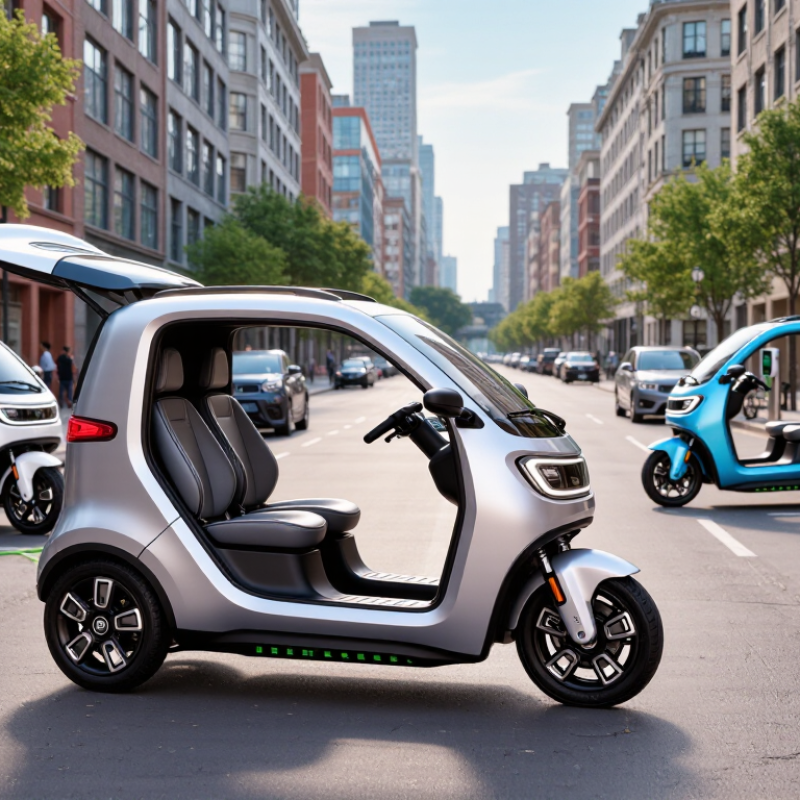
An electric quadricycle is a compact, four-wheeled vehicle designed for short urban trips. It usually sits between an electric bicycle and a conventional passenger car. European vehicle classifications commonly distinguish lighter L6e and heavier L7e categories, although local rules differ. These differences affect speed, mass, power, licensing, and road access.
The category has practical value in crowded cities. A narrow body can fit older streets, small parking spaces, and dense residential areas. A quiet electric drivetrain also reduces local exhaust emissions during daily travel. The IEA’s Global EV Outlook 2024 recorded almost 14 million electric car sales worldwide in 2023. However, that figure does not directly measure quadricycles. Treating it as a quadricycle market estimate would be unreliable.
UN DESA projects that about 68% of the global population may live in urban areas by 2050. This trend increases demand for smaller mobility tools, especially for commuting, deliveries, and short family journeys. A practical example is a 30-kilometre daily route between a suburban home and a rail station. A quadricycle may use less parking space and less battery capacity than a full-size car. Yet it is not a miniature car, exactly. Weather protection, crash performance, charging access, and cabin comfort can remain limited. Buyers should check local vehicle classifications, real road conditions, and service support before comparing models.
2026 Best Electric Quadricycle for Global Buyers
Definition and Role of Electric Quadricycles in Global Mobility
Electric quadricycles are compact four-wheeled vehicles designed for short-distance urban mobility, local delivery, and low-energy transportation. In the European regulatory framework, L6e represents light quadricycles limited to 45 km/h and 4 kW, while the L7e-A heavy on-road category allows up to 90 km/h and 15 kW. These benchmarks help global buyers compare vehicle positioning, although local approval requirements may differ.
Source: Regulation (EU) No 168/2013, Annex I. Values shown are regulatory category limits for electric vehicles.
Key Features and Technical Specifications of 2026 Electric Quadricycles
2026 Best Electric Quadricycle for Global Buyers
Electric quadricycles are becoming practical tools for short urban journeys, campus travel, and last-mile delivery. The IEA’s Global EV Outlook 2025 reports that electric car sales exceeded 17 million in 2024. This wider market is improving battery cells, motors, and charging hardware.
A capable 2026 quadricycle should offer a 6–15 kWh battery and 80–150 kilometers of real-world range. A 48V or 72V electrical system keeps maintenance relatively simple. Charging at 2–4 kW can refill the battery overnight. Some models may support faster charging, but that adds heat and cost. A 5–15 kW motor suits low-speed streets, while speed limits depend on local vehicle classes.
Cabin dimensions matter more than glossy specifications. Buyers should check seating width, cargo volume, ground clearance, and payload capacity, often between 200 and 350 kilograms. Useful equipment includes LED lighting, hydraulic braking, reversing cameras, battery thermal monitoring, and corrosion-resistant panels. The European Commission’s L-category framework shows why homologation must be checked market by market. A vehicle approved for 45 km/h may not qualify for an 80 km/h road class elsewhere. Range claims also deserve caution. Cold weather, hills, passengers, and heating can reduce them sharply. That gap is easy to underestimate.
2026 Best Electric Quadricycle for Global Buyers - Key Features and Technical Specifications of 2026 Electric Quadricycles
| Specification | Urban Light L6e | Extended-Range L6e | Passenger L7e | Cargo L7e |
| Typical classification | L6e-B light passenger quadricycle | L6e-B light passenger quadricycle | L7e-C heavy passenger quadricycle | L7e-U heavy goods quadricycle |
| Recommended use | Short urban trips, campuses and neighborhood mobility | Daily commuting and suburban city travel | Longer urban routes, ring roads and two-person travel | Last-mile delivery, maintenance and municipal services |
| Seating capacity | 1–2 occupants | 2 occupants | 2–4 occupants, depending on configuration | 1–2 occupants |
| Maximum design speed | Up to 45 km/h | Up to 45 km/h | Typically 70–90 km/h; market and road rules may limit speed | Typically 70–90 km/h; market and road rules may limit speed |
| Electric motor output | 3–6 kW continuous rated output | 4–6 kW continuous rated output | 15–25 kW peak output; exact rating varies by homologation | 15–25 kW peak output; tuned for low-speed torque |
| Battery chemistry | Lithium-ion, commonly LFP or NMC | Lithium-ion, commonly LFP or NMC | Lithium-ion, commonly LFP or NMC | Lithium-ion, commonly LFP for cycle durability |
| Usable battery capacity | 5–8 kWh | 8–15 kWh | 15–25 kWh | 15–30 kWh |
| Typical real-world range | 50–80 km | 80–140 km | 100–180 km | 80–160 km, depending on payload and route |
| AC charging | 2.3–3.6 kW onboard charger | 3.6–7.4 kW onboard charger | 6.6–11 kW onboard charger | 6.6–11 kW onboard charger |
| Approximate charging time | 3–5 hours from a standard AC outlet | 3–6 hours using AC charging | 2–5 hours using AC charging | 2–6 hours using AC charging |
| Overall length | 2.2–2.7 m | 2.4–3.0 m | 3.0–3.7 m | 3.2–4.0 m |
| Overall width | 1.2–1.5 m | 1.3–1.6 m | 1.5–1.8 m | 1.5–1.9 m |
| Turning circle | 6.5–8.5 m | 7–9 m | 8–11 m | 8–12 m |
| Cargo or luggage capacity | 100–200 L | 150–300 L | 200–500 L | 1.5–3.5 m³ enclosed cargo volume |
| Useful payload | 120–180 kg | 150–220 kg | 200–350 kg | 250–600 kg, depending on approval and body design |
| Safety equipment to prioritize | Three-point belts, LED lighting, parking sensors and reinforced passenger cell | Three-point belts, airbags where available, electronic stability features and rear camera | ABS or equivalent braking system, airbags where available, stability control and strong occupant protection | Load restraint points, ABS or equivalent braking system, reversing camera and high-visibility lighting |
| Best buyer profile | Buyers prioritizing the lowest purchase and operating cost | Buyers needing more daily range without moving to a larger vehicle | Buyers requiring higher speed, stronger performance and passenger comfort | Fleet buyers focused on payload, uptime and low local-emission delivery |
Technical note: Figures are representative 2026 buyer-reference ranges for electric quadricycles and are not specifications for a particular manufacturer. Actual range, payload, charging time, equipment and legal requirements vary by market, battery option, weather, driving speed, road conditions and homologation. In the European Union, L6e vehicles are generally limited to 45 km/h and 6 kW continuous rated power; L7e requirements differ by vehicle subtype and approval category.
How Global Buyers Can Compare Models and Choose the Right One
2026 Best Electric Quadricycle for Global Buyers
Choosing the right electric quadricycle requires more than comparing battery size or showroom range. Global buyers should examine how each model performs in real daily conditions.
Start with the intended route. A compact vehicle for narrow city streets may need a smaller turning circle and accurate parking dimensions. For suburban use, buyers should check climbing ability, suspension comfort, and stable performance on uneven roads. Ask for measured range, not only laboratory figures. Cold weather, passengers, hills, and heating can reduce distance noticeably.
Charging access matters just as much. Confirm the charging connector, charging time, battery warranty, and local service support before placing an order. A model with modest range may work better than a longer-range vehicle if home charging is simple. Check cabin width, seat adjustment, visibility, storage, lighting, and safety equipment in person. Small details become important during a wet morning commute.
“I once focused too heavily on range. That was a mistake. A stiff seat and limited rear visibility affected everyday comfort more than expected. Buyers should request a supervised test drive, including reversing, turning, braking, and driving over a familiar incline. Compare total ownership costs, including insurance, maintenance, electricity, delivery, and replacement parts. Confirm that the vehicle meets local road, registration, and equipment requirements. Specifications can look precise, yet real use remains different. A careful comparison should leave room for that uncertainty.